Why clean air comes at a premium under a central plan to reduce pollution

The NCAP is a pollution control initiative aimed at reducing the concentration of particulate matter in the atmosphere by at least 20 per cent by 2024
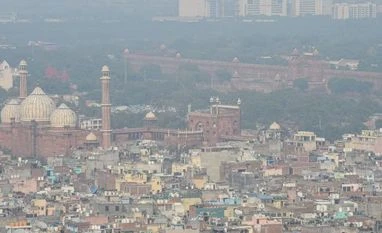
Jama Masjid
A view of historic Jama Masjid and Red Fort shrouded in smog, in New Delhi (Photo: PTI)
Ishaan Gera New Delhi
3 min read Last Updated : Oct 09 2022 | 11:17 PM IST
Last month, the Delhi government announced a 15-point action plan to tackle air pollution during the winter months. Given the problem of stubble burning, one would expect states such as Punjab to spend more to curb air pollution in the cities. But a Business Standard analysis found that Punjab had only spent 11 per cent of the funds allocated to the state under the National Clean Air Programme (NCAP).

The NCAP is a pollution control initiative aimed at reducing the concentration of particulate matter in the atmosphere by at least 20 per cent by 2024. It was launched in 2019, under the seven central ministries, the Central Pollution Control Board and NITI Aayog to fund air quality management for 102 cities across 23 states and Union Territories. Data was available for 117 of the 132 cities that come under the programme.

Even though Punjab has one of the lowest utilisations under the programme, it cannot be considered an outlier. Analysis indicates that states utilised only half the funds allocated under the programme. States such as Chhattisgarh and Assam had a fund utilisation rate of 21 and 12 per cent, respectively. The two cities in Jammu and Kashmir had a utilisation rate of under 1 per cent.

On the other end of the spectrum are Gujarat and West Bengal, which had 100 per cent utilisation, followed by Madhya Pradesh and Bihar. Twelve of the 21 states and UTs analysed had over 50 per cent utilisation.

Moreover, fund utilisation is not just a problem in NCAP. It is a problem that persists for other clean air programmes as well. Analysis of data from Budgets shows that even though allocation to clean environment programmes has increased, fund utilisation has lagged.

In some instances, both the allocation and utilisation have declined. Take the case of the Climate Change Action Plan (CCAP). The government allocated Rs 30 crore towards CCAP in the 2022-23 Budget and 2021-22 Budget, whereas allocation averaged Rs 40 crore each year between 2017-18 and 2020-21. Only 70 per cent of the allocation has been utilised for all the years.

In the case of programmes for the control of pollution, the utilisation was 77 per cent.

But even a higher utilisation may not indicate better air quality. An analysis by the Centre of Science and Environment (CSE) found that there was barely a difference between the particulate matter (PM2.5) emissions of the cities under NCAP and those outside the ambit. Only 14 of 43 cities registered a 10 per cent or more reduction between 2019 and 2021, according to the CSE study.


One subscription. Two world-class reads.

Already subscribed? Log in

Subscribe to read the full story →
*Subscribe to Business Standard digital and get complimentary access to The New York Times

Smart Quarterly

₹900

3 Months

₹300/Month

SAVE 25%

Smart Essential

₹2,700

1 Year

₹225/Month

SAVE 46%
*Complimentary New York Times access for the 2nd year will be given after 12 months

Super Saver

₹3,900

2 Years

₹162/Month

Subscribe

Renews automatically, cancel anytime

Here’s what’s included in our digital subscription plans

Exclusive premium stories online

  • Over 30 premium stories daily, handpicked by our editors

Complimentary Access to The New York Times

  • News, Games, Cooking, Audio, Wirecutter & The Athletic

Business Standard Epaper

  • Digital replica of our daily newspaper — with options to read, save, and share

Curated Newsletters

  • Insights on markets, finance, politics, tech, and more delivered to your inbox

Market Analysis & Investment Insights

  • In-depth market analysis & insights with access to The Smart Investor

Archives

  • Repository of articles and publications dating back to 1997

Ad-free Reading

  • Uninterrupted reading experience with no advertisements

Seamless Access Across All Devices

  • Access Business Standard across devices — mobile, tablet, or PC, via web or app

Topics :Air qualitypollutionDelhi governmentDelhi air qualityClean air project

Next Story



