3 min read Last Updated : Jun 01 2021 | 2:49 PM IST
The Covid trauma has changed economics—maybe forever
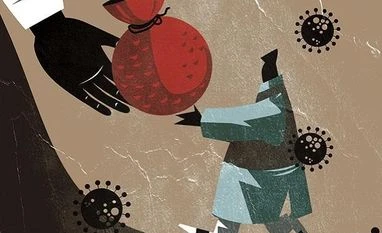
Only a massive disruption like coronavirus can dislodge or jolt economic ideas that have been entrenched for decades. The pandemic could fuel a tectonic shift in economic theory and practice. The conventional practice until now has been that of taming inflation on priority and managing the pace of economic growth by adjusting the cost of private borrowing rather than by spending public money. The pandemic pushed aside those conventions around the world. In the new economics, fiscal policy took over from monetary policy. Public spending is the new norm and Central banks played a secondary role. Governments channeled cash directly to households and businesses and ran up record budget deficits. US managed to come out of the worst slump faster than many expected by throwing billions of dollars into the economy. Even institutions like the International Monetary Fund (IMF), longtime believers of the old rules of fiscal prudence, went all out to convince countries the benefits of government stimulus. Read here
Let's look at the global statistics
Global infections: 170,724,858
Global deaths: 3,550,179
Vaccine doses administered: 294,630,899
Nations with most cases: US (33,264,415), India (28,175,044), Brazil (16,545,554), France (5,728,788), Turkey (5,249,404).
Pakistan considers stimulus package to support economy
Pakistan’s finance ministry is considering a stimulus package to support the economy, according to a Bloomberg report. Newly-appointed finance minister Shaukat Tarin is leading the initiative, which can be monetary, fiscal or both. The South Asian nation is expected to expand 3.9 per cent in the year ending June from a rare contraction in the previous period. Still, the government is wary of a fresh wave of the coronavirus pandemic derailing its projection. At the same time, the government is looking to renegotiate some terms of a bailout package with the International Monetary Fund (IMF). Read here
On the Covid front lines are dogs. So far it's working well
A group of dogs in Thailand has accurately detected the virus 96.2 per cent of the time in controlled settings, according to the country's top university researchers. These are part of global corps of dogs that are being trained to sniff out coronavirus in people. Preliminary studies, conducted in multiple countries, suggest that their detection rate may surpass that of the rapid antigen testing often used in airports and other public places. The hope is that dogs can be deployed in crowded public spaces, like stadiums or transportation hubs, to identify people carrying the virus. Their skills are being developed in Thailand, the United States, France, Britain, Chile, Australia, Belgium and Germany, among other countries. Read here
Peru has world’s worst per capita Covid toll
Peru has almost tripled its official coronavirus death toll to 180,764, after a government review on Monday, making it the country with the worst death rate per capita, according to recent John Hopkins University data. Peru replaces Hungary, which has about 300 per 100,000 people. With its updated death toll, Peru stands at more than 500 Covid-19 deaths per 100,000 people. Peru has been among the hardest hit Latin America countries during the pandemic, with its hospitals overcrowded with patients and demand for oxygen outstripping availability. Read here