Must consider shareholder interests: DIPAM secretary Tuhin Kanta Pandey

'DIPAM has been advising ministries to carefully evaluate any policy changes which play a larger part in the functioning of PSUs', said Pandey
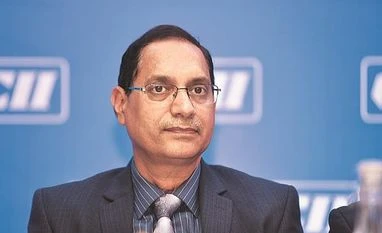
Tuhin Kanta Pandey
DIPAM secretary Tuhin Kanta Pandey
Nikunj Ohri
3 min read Last Updated : Oct 30 2021 | 1:32 AM IST
The stocks of IRCTC tanked around 30% intraday on Friday after the Railways asked it to share 50% of its revenues from the convenience fees it charges customers. Department of Investment and Public Asset Management (DIPAM) Secretary Tuhin Kanta Pandey tells Nikunj Ohri in an interview that his department has advised ministries to carefully evaluate policies that impact the functioning of PSUs. Edited excerpts:

There has been volatility in IRCTC’s stock price for a few days and the recent directive by the Ministry of Railways further fueled it..

The volatility of stock is dependent on several factors and linked to predictions on Covid-19, as well as the opening up of the economy. There will be certain risks that can’t be ignored.

Should such policy decisions be taken for PSUs that impact their revenues and only benefit the government?

DIPAM has been advising ministries to carefully evaluate any policy changes which play a larger part in the functioning of PSUs. If there are sudden policy changes, it is all the more shocking. These policies can be decided well in advance, and notice can be given in advance or a gradual roadmap can be drawn. Other possibilities and appropriate timing are the nuances that ministries need to understand. Wherever we have issues that impact revenue and profitability of an enterprise, then there needs to be careful assessment, subject to long-term goals of trying to be competitive.

The Ministry of Railways has evaluated the issue, although a bit late, but the decision has been taken swiftly and with alacrity. Since IRCTC is a listed entity with a larger ownership, decisions need to be taken considering the interests of all shareholders.

What was the rationale behind the Railways’ direction to IRCTC to share revenue?

The Ministry of Railways will be in a better position to answer this. But sharing of revenues is a revenue generation measure on part of Railways. The question is whether that is the best way to do it, or if there are other ways.

Will such steps impact the value of Life Insurance Corporation of India’s investments in PSUs ahead of its IPO?

Investments are made considering market risks. Instead of day to day market movements, volume weighted average price over a period is looked at, which reflects a clearer picture of the performance of the stock.

In this case, Railways did a good thing by quickly reviewing the decision.

Should the government take steps to maintain an arm’s length from PSUs as it looks to list and privatise some of them?

Arm’s-length distance is maintained, and in the case of IRCTC, it has been a gainer because of the support from the Ministry of Railways. PSUs have a reasonable level of autonomy, but there is a certain level of support that the market also expects that the government will provide to the PSUs. For example, defence companies get contract orders from the government, so then one can’t say that arm’s length has to be maintained and should not support PSUs with orders.

Is the government mindful of interests of retail investors who choose to invest in PSUs?

One issue cannot be blown out of proportion, and this cannot be linked to all PSUs.

The government is very mindful of the interests of retail and small investors. The government will not be a mute spectator, and will take proactive steps to see that their participation in the equity market, especially in PSU stocks, is rewarding.


One subscription. Two world-class reads.

Already subscribed? Log in

Subscribe to read the full story →
*Subscribe to Business Standard digital and get complimentary access to The New York Times

Smart Quarterly

₹900

3 Months

₹300/Month

SAVE 25%

Smart Essential

₹2,700

1 Year

₹225/Month

SAVE 46%
*Complimentary New York Times access for the 2nd year will be given after 12 months

Super Saver

₹3,900

2 Years

₹162/Month

Subscribe

Renews automatically, cancel anytime

Here’s what’s included in our digital subscription plans

Exclusive premium stories online

  • Over 30 premium stories daily, handpicked by our editors

Complimentary Access to The New York Times

  • News, Games, Cooking, Audio, Wirecutter & The Athletic

Business Standard Epaper

  • Digital replica of our daily newspaper — with options to read, save, and share

Curated Newsletters

  • Insights on markets, finance, politics, tech, and more delivered to your inbox

Market Analysis & Investment Insights

  • In-depth market analysis & insights with access to The Smart Investor

Archives

  • Repository of articles and publications dating back to 1997

Ad-free Reading

  • Uninterrupted reading experience with no advertisements

Seamless Access Across All Devices

  • Access Business Standard across devices — mobile, tablet, or PC, via web or app

Topics :PSUspublic sector undertakingsQ&ADipam

Next Story



