Commercial banks have requested the Reserve Bank of India (RBI) to relax norms regarding the classification of non-performing loans for micro, medium and small enterprises (MSMEs), pointing to the stress the sector is facing due to lockdowns imposed by different state governments following the second wave of Covid-19.
Sources in the banking industry said a request was made to the regulator to extend the non-performing asset (NPA) classification norms for MSME borrowers to 180 days as compared to 90 days now. At present, a loan becomes substandard – the first category of NPA – if repayment is overdue for more than 90 days.
“There was a demand from some quarters to rework the NPA norms for MSMEs,” said a top official of a large public sector bank who wished not to be identified.
Bankers said the MSME sector was already reeling under pressure and now the second wave would make things extremely difficult for it.
According to Basel-III guidelines, all sovereign countries have the flexibility to do portfolio-wise, sector-wise NPA norms, but the RBI has taken a conservative stand because it probably thinks sovereign rating improves that way. However, there is a provision that says countries can take a view on NPA norms in accordance with their needs, the official said, adding that the norms could be relaxed for two years, or till the situation improves, after which the 90-day rule could be implemented again.
On Wednesday, the central bank announced steps to mitigate the economic impact of local lockdowns. Among other steps, the regulator allowed debt restructuring for MSMEs, but it would be limited to entities that had not opted for the same scheme last year.
According to Crisil, 3,400 mid-sized companies that are rated (out of 6,800) by the agency will be eligible for debt recast since their loan exposure is less than Rs 25 crore and standard – the eligibility conditions as prescribed by the RBI. Crisil said the restructuring could provide interim liquidity relief to these companies to cope with near-term cash-flow mismatches.
Even if the RBI has allowed the debt recast, it still can relax NPA norms, bankers said.
The issue with debt restructuring, as bankers explain, is that banks still have to make 10 per cent provision.
When a loan is restructured, banks need to make a provision of 15-20 per cent -- the same as if the account becomes substandard. However, in the one-time debt recast scheme that was announced by the RBI last year, banks were asked to provide 10 per cent. Debt recast with 10 per cent provision is not much of a relief, bankers said.
According to the RBI data, credit flow to the MSME sector grew by 6.8 per cent to Rs 16.14 trillion in 2019-20, as compared to Rs 15.11 trillion a year ago. Loans were extended to 38.42 million such units -- 19.8 per cent more than the previous year.

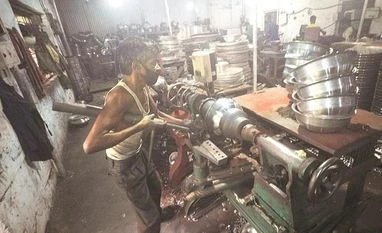 "Banks want RBI to relax NPA norms for lockdown-stressed MSME sector")












