Cash is still king in India, but digital payments rising sharply: RBI

"India is next only to China in terms of the cash. However, the percentage of cash withdrawals to GDP has been constant in India at around 17 per cent," the report said.
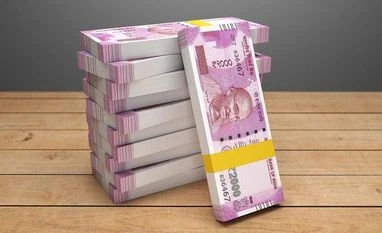
cash
“India continues to have a strong bias for cash payments," the study noted.
Anup Roy Mumbai
2 min read Last Updated : Feb 25 2020 | 2:49 AM IST
Cash is still king in India, but there has been a perceptible shift in favour of digitisation in recent years, according to an internal study of the Reserve Bank of India (RBI). Having a high currency in circulation (CIC) relative to gross domestic product (GDP) is a good indicator of cash being highly preferred for payments. Based on this assumption, “India continues to have a strong bias for cash payments," the study noted.

Demonetisation and an active growth in GDP brought down the cash in circulation as a percentage of GDP to 8.70 per cent in 2016-17. This increased to 10.70 per cent in 2017-18 and to 11.2 per cent in 2018-19 which, however, is less than the pre-demonetisation level of 12.1 per cent in 2015-16. 

“The rate of increase is lower, indicating a perceptible shift away from cash,” the report said.

The notes in circulation (CIC minus coins in circulation) increased at an average rate of 14 per cent between October 2014 and October 2016. 

Assuming the same growth rate, notes in circulation (NIC) would have been Rs 26 trillion in October 2019. NIC, however, was Rs 22.3 trillion, indicating that digitaisation and reduction in cash usage helped reduce NIC by over Rs 3.5 trillion, according to the report. However, the cash withdrawals from ATMs increased over the past five years. 

“India is next only to China in terms of the cash. However, the percentage of cash withdrawals to GDP has been constant in India at around 17 per cent,” the report said, adding, with a compound annual growth rate (CAGR) of 9 per cent in terms of 
volume and 10 per cent in terms of value, the growth in cash withdrawals has been slow when compared to digital payment transactions, which grew at a CAGR of 61 per cent and 19 per cent in terms of volume and value, respectively. This indicated a shift towards digitisation. 

Thus, “in India, like in many parts of the world, cash is the well-established and widely used payment instrument. It is, however, reassuring that non-cash payments, especially those using electronic or digital modes, are rapidly increasing.”

One subscription. Two world-class reads.

Already subscribed? Log in

Subscribe to read the full story →
*Subscribe to Business Standard digital and get complimentary access to The New York Times

Smart Quarterly

₹900

3 Months

₹300/Month

SAVE 25%

Smart Essential

₹2,700

1 Year

₹225/Month

SAVE 46%
*Complimentary New York Times access for the 2nd year will be given after 12 months

Super Saver

₹3,900

2 Years

₹162/Month

Subscribe

Renews automatically, cancel anytime

Here’s what’s included in our digital subscription plans

Exclusive premium stories online

  • Over 30 premium stories daily, handpicked by our editors

Complimentary Access to The New York Times

  • News, Games, Cooking, Audio, Wirecutter & The Athletic

Business Standard Epaper

  • Digital replica of our daily newspaper — with options to read, save, and share

Curated Newsletters

  • Insights on markets, finance, politics, tech, and more delivered to your inbox

Market Analysis & Investment Insights

  • In-depth market analysis & insights with access to The Smart Investor

Archives

  • Repository of articles and publications dating back to 1997

Ad-free Reading

  • Uninterrupted reading experience with no advertisements

Seamless Access Across All Devices

  • Access Business Standard across devices — mobile, tablet, or PC, via web or app

Topics :Reserve Bank of IndiaDigital PaymentsCurrency in Circulation

Next Story


