Why Modi govt's plan to help small businesses has done little to save them

Businesses from textiles to sports goods and furniture are shuttered or working at a bare minimum, and cows roam streets that would be normally packed with workers and vehicles

msme, jobs, workers, supply chain, industy, manufacturing, production
Small businesses that account for nearly one-quarter of India's economy and employ more than 500 million workers are the worst affected by Covid-19
Reuters Meerut/Mumbai
4 min read Last Updated : Jul 13 2020 | 8:44 PM IST

India reopened for business in June after months of lockdown but for thousands of small entrepreneurs in the town of Meerut, near Delhi, the blow has been devastating.

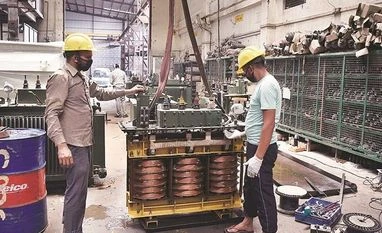
Businesses from textiles to sports goods and furniture are shuttered or working at a bare minimum, and cows roam streets that would be normally packed with workers and vehicles.

Prime Minister Narendra Modi's programme to help small businesses back on their feet through $40 billion of government-gauranteed loans is too little and may not be enough to save the many companies that form the backbone of India's economy, nearly three dozen entrepreneuers Reuters spoke to across the country said.

Some said their business was so hamstrung by the pandemic that taking on new debt made little sense. They would rather the government had helped them by cutting the goods and service tax or waive off the interest on loans.

Others said that despite Modi's promise to open up the credit lines, it was not easy convincing bankers to lend because of the death throes their businesses were in.

Ashok, whose near Rs 1 crore ($133,000) annual turnover company based in Meerut made steel furniture for hotels and schools, said he had fired eight of his 10 workers and was thinking of shutting down the operation.

"It would be better for me to close the unit than to run from pillar to post to get a loan," said Ashok, who did not want to give his full name.

He said his banker told him his creditworthiness is low as his business is struggling.

The Finance Ministry, which has made the loan support scheme the centerpiece of the rescue effort, did not respond to a Reuters request for comment on the problems faced by businesmen.
 

Small businesses that account for nearly one-quarter of India's $2.9 trillion economy and employ a substantially large portion if the workforccde are the worst affected by the pandemic.

Nearly 35% of small businesses across the country could shut down soon in the absence of government support, the Consortium of Indian Associations said in a letter to Modi's office seen by Reuters.

Dole Out Loans

Bankers said there is government pressure to dole out loans, but businesses are not coming forward as demand remains tepid.

Till now, lenders have paid out Rs 56,100 cr, barely 19% of the sum earmarked, and approved loans worth Rs 1.145 trillion since the third week of May, according to government data.

Businesses say that the lenders are either asking for increased paperwork or the ones in desperate needs are being deemed ineligible.

"I was asked to provide a collateral and also buy an insurance for getting this loan whereas it is supposed to be collateral free," said an entrepreneur in Modi's home state of Gujarat.

But two bankers said that securing money from the government even in a fully-backed sovereign guarantee scheme is not easy.

"The experience is unpleasant," said the former corporate head of a state-owned bank.
 

"You lend to most of these businesses only because government has directed but when it comes to getting back the money, one has to spend considerable resources and time which makes little sense," he added.

Businesses have been pushed to the wall as their suppliers have not paid and orders have trickled to zero while fixed costs including electricity, wages, installments for earlier bank loans have drained their funds.

"We have not got a single rupee relief from the government," said Sanjeev Rastogi, a garment manufacturer in Meerut who is running his factories at 25% of the production capacity.

Rastogi has incurred a loss of Rs 35 lakh in the last two months and believes he may have to close down his business in the next three months.

About 25% small factories out of over 10,000 textile units in Meerut could shut down and default on bank loans in the next few months, said Anurag Agarwal, chairman of the Meerut chapter of Indian Industry Association.

Rastogi is making last ditch efforts to remain in business.

"Otherwise, I will sell the factory at any price to save some money for my retirement."

One subscription. Two world-class reads.

Already subscribed? Log in

Subscribe to read the full story →
*Subscribe to Business Standard digital and get complimentary access to The New York Times

Smart Quarterly

₹900

3 Months

₹300/Month

SAVE 25%

Smart Essential

₹2,700

1 Year

₹225/Month

SAVE 46%
*Complimentary New York Times access for the 2nd year will be given after 12 months

Super Saver

₹3,900

2 Years

₹162/Month

Subscribe

Renews automatically, cancel anytime

Here’s what’s included in our digital subscription plans

Exclusive premium stories online

  • Over 30 premium stories daily, handpicked by our editors

Complimentary Access to The New York Times

  • News, Games, Cooking, Audio, Wirecutter & The Athletic

Business Standard Epaper

  • Digital replica of our daily newspaper — with options to read, save, and share

Curated Newsletters

  • Insights on markets, finance, politics, tech, and more delivered to your inbox

Market Analysis & Investment Insights

  • In-depth market analysis & insights with access to The Smart Investor

Archives

  • Repository of articles and publications dating back to 1997

Ad-free Reading

  • Uninterrupted reading experience with no advertisements

Seamless Access Across All Devices

  • Access Business Standard across devices — mobile, tablet, or PC, via web or app

Topics :CoronavirusMSMEStimulus packageCOVID-19

Next Story




