In the evening of June 15, a police official in the Chhattisgarh capital, Raipur, received an unusual message. He was heading the force deployed to deal with the farmers who were supposed to stage a road blockade the next day. The officer was instructed not to use force even if the agitation turned violent. The Chhattisgarh government did not want what happened in Madhya Pradesh (MP) to happen there. In the neighbouring state, six farmers were killed when the police opened fire on them.
The police officer was wary. Instead of directly confronting the farmers, he diverted the traffic on National Highway 6. The Chhattisgarh Kisan Mazdoor Mahasangh, an alliance of 21 organisations, was staging a “chakka jam” (road blockade) on the outskirts of the state capital. As there was no traffic congestion on the National Highway connecting Raipur and Sambalpur, a direct clash was averted between the force and the agitators. After three hours, the agitators retreated.
The protest, which was held across the state, was by and large peaceful and no untoward incident was reported from anywhere. However, farmers were detained at a few places such as Durg, Rajanandgaon, and Rajim. They were later released unconditionally. The government was relieved.
Chhattisgarh is not immune to farmers' violent agitations. Unlike its parent state of MP, the Rashtriya Swayamsevak Sangh (RSS) farmers’ wing Bharatiya Kisan Sangh, Rashtriya Kisan Mazdoor Sangh, and Bharatiya Kisan Mazdoor Sangh are not active in Chhattisgarh to “mislead” the farmers. The various kisan unions that were active in MP were not allowed to unite in Chhattisgarh and that prevented a similar situation.
Farmers are unorganised in the state, which is why they failed to launch a strong movement. In Chhattisgarh, farmers are not buying cash crops and hence remain unaffected when crops fails. Interest-free loan is another issue that fails to charge them up.
But it is not that they are happy with the government. This year they had to dump and destroy quintals of tomatoes because the demand was sluggish. Moreover, the reluctance of the state government to address pending demands had been testing farmers’ patience. “The state government should not test the patience of farmers,” said Virendra Pandey, president of the Chhattisgarh Joint Farmers’ Front. Farmers are not happy with the government policy and if the authorities do not act sensibly, their resentment may spill out into the open and take an alarming turn, according to him. After the road blockade, farmers were planning to intensify their agitation and would take it to the village level. They had planned to stage a gherao of Bharatiya Janata Party (BJP) Members of Parliament and legislators.
Farmers want the BJP to fulfil the promises it had made before the elections. The ruling BJP government in Chhattisgarh had announced in its manifesto during the 2013 assembly polls that it would enhance the minimum support price of paddy to Rs 2,100 a quintal, besides a bonus of Rs 300 to farmers against procuring each quintal of paddy. But so far it has failed to do so, Pandey said. The other demands included procuring every grain of paddy, waiving crop loans, and implementing the report of the Swaminathan committee. The farmers’ body said that the BJP government, led by Raman Singh, did not once communicate with farmers in the past three and a half years. This shows the insensitivity of the authorities towards them.
The farmer leaders said the state government shouldn't wait for agitations to intensify. It should immediately initiate talks with farmers’ associations. Chhattisgarh may be resistant to violent protests but has a glorious past of not giving up easily, come what may. Farmers of the region launched the first satyagraha in the freedom movement. In July 1920, The “Nahar (canal) Satyagraha” started at Kandel village of Dhamtari district (about 80 km from Raipur) under the leadership of Sundarlal Sharma, Narayan Rao Medhawale, and Babu Chotelal Srivastava. The farmers of Kandel launched a movement against the British government, which had imposed the irrigation tax. A payment warrant of over Rs 4,000 was issued against them. The farmers defied the order and refused to pay. In return, the government started suppressing the villagers and took away their cattle. The Kandel Satyagraha continued even as the British government took many into custody and tortured them. The leaders then decided to urge Mahatma Gandhi to support and lead the movement. The British government swung into action after sensing the expansion of the movement at the national level and asked the deputy commissioner of Raipur to probe the matter.
Based on his report, the British government wrote off the tax and returned the cattle. The decision was taken before Gandhi reached Raipur to lead the agitation. Still, he visited Chhattisgarh in connection with the satyagraha in December and this was his first visit to the region.
Read this article for free
Register to continue reading premium journalism and analysis from Business Standard.

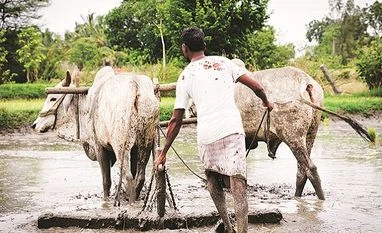 "Chhattisgarh farmers: Quiet, but not contented")












 Connect with us on WhatsApp