Textiles Minister Smriti Irani’s shift from the high-profile human resources development (HRD) ministry will come with its own share of challenges.
The textiles ministry’s role in fulfiling Prime Minister Narendra Modi’s promise of providing jobs to the youth is critical. In Tuesday’s Cabinet expansion, Irani lost her ministry to Prakash Javadekar. Santosh Gangwar, minister of state for textiles (independent charge) was shifted to finance.
Bharatiya Janata Party insiders agree Irani’s personality was an obstacle at the HRD ministry. The Rashtriya Swayamsevak Sangh (a Hindu nationalist organisation) was unhappy with Irani’s appointment to a ministry it cares about.
“The controversies at the HRD ministry did not help the government’s cause. It needed somebody less aggressive. But it is not as if Irani has been given an unimportant portfolio,” a BJP insider said.
| MARRED WITH CONTROVERSY |
- Textiles ministry’s role in fulfiling Modi’s promise of jobs to the youth is critical
- Bharatiya Janata Party insiders agree Irani’s personality was an obstacle at the HRD ministry
- The RSS was unhappy with Irani’s appointment to a ministry that it cares about
|
The textile sector is the largest employer in the country, employing more than 32 million people and the government is banking on it to absorb millions more. Irani will have to see that a special package declared for the sector last month falls into place.
Irani told the media on Wednesday she was happy to be able to push for greater women employment. Women form a significant share of the labour force in the textile sector.
She was non-committal on speculation that she could be the BJP's chief ministerial candidate in the Uttar Pradesh Assembly polls.
Approved last month by the Cabinet, the slew of measures aim to improve India’s competitiveness in textiles and lead to greater production through a string of labour reforms. These, in turn, are expected to generate 10 million new jobs in the textiles sector in three years.
The package is estimated to cost Rs 6,000 crore and the ministry will be hard-pressed to show results soon. Nearly Rs 5,500 crore is for an additional five per cent duty drawback for the garments sub-sector. The government will also bear the cost of employer’s contribution under the Employees' Provident Fund scheme for new employees of the garment sector earning less than Rs 15,000 a month for the first three years.
All this has miffed players operating in parts of the textile sector. They want such benefits be extended to the rest of the textile value chain.
In the works for more than a year, the revamped national textiles policy 2016 will also have to be pushed through Cabinet by Irani. The draft policy, pushed hard by Gangwar, is likely to be taken up by the Cabinet next month to focus on achieving $300 billion exports and 35 million new jobs by 2024-25.
India exported $36.25 billion worth of textiles and related goods in 2015-16, a 2.4 per cent decline from 2014-15. Competing nations Bangladesh and China have been blamed for aggressively edging out Indian exporters from traditional markets like Europe.
Irani said she would focus on better engagement with the sector to boost exports.

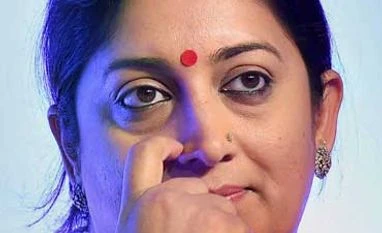 "Creating jobs is Irani's biggest challenge")


 Connect with us on WhatsApp