Digital expansion helps rich more than poor: World Bank report
Says gains of higher growth, more jobs and better public services also short of expectation, recommends more focus on access
BS Reporter New Delhi Despite rapid adoption of digital technologies across the world, the anticipated dividends of higher growth, job creation and better public services are well short of expectation, says the World Bank in its World Development Report 2016.
And, rather than the poor, the more affluent sections have garnered a disproportionate share of the benefits of rapid digital expansion, it adds.
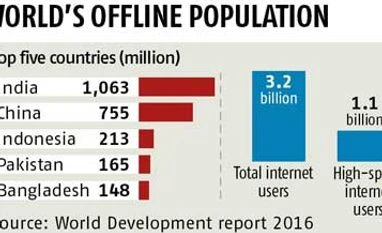
Digital technologies have over the past decades succeeded in bringing the excluded sections of society into the formal system. The number of internet users has more than tripled in a decade, reaching an estimated 3.2 billion in 2015. The Bank says, "Among those in the bottom fifth of the economic scale, nearly 70 per cent own a mobile phone."
In many developing countries, digital platforms have been used to address the problem of 'last mile connectivity'. In India, more households own a mobile phone than have access to electricity or clean water.
The report provides numerous examples of where access to digital platforms has led to welfare gains. For example, the Aadhaar platform in India has successfully provided unique digital identification to nearly one billion, increased access and reduced corruption in public services. Governments are using the platform to identify recipients of subsidies to prevent leakage.
In Narma Dih, a village in Bihar lacking access to electricity and all-weather roads, "poor farmers have benefited from digitally enabled agricultural extension services from DigitalGreen, a non-government organisation that trains farmers using locally produced how-to videos". Simple SMS messages have proven effective in reminding people living with HIV to take their life-saving drugs.
But, despite these benefits, at the aggregate level, the report says the impact of digital technologies has been smaller than expected. Productivity growth has slowed, labour markets have become more polarised and within many countries, inequality has risen.
The report argues this is because of two reasons. First, nearly 60 per cent of the world's population (a large section of which are in India and China) continue to remain excluded from the digital economy. Second, benefits of digital technologies are to some extent offset by emerging risks. For example, technological advancement has made manufacturing more capital-intensive. With mid-level jobs becoming automated, it has led to a hollowing of the labour market.
To fully reap the digital age's benefits, the Bank argues for ending the digital divide by making access to the internet "universal, affordable, open, and safe" and "strengthening regulations that ensure competition among business, adapting workers' skills to the demands of the new economy, and fostering accountable institutions".
Governments undoubtedly will play an integral role in bridging the digital divide. Yet, they also need to improve service provider management and increase citizen participation. "Governments need to ensure a business climate in which all firms can easily connect and compete," the report adds.

 "Digital expansion helps rich more than poor: World Bank report")


 Connect with us on WhatsApp