Economists urge govt to release NSSO data on employment without any changes

Chief statistician Pravin Srivastava gave a presentation on the findings of the NSSO report
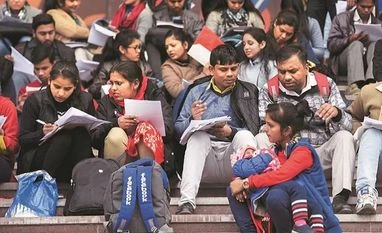
Jobs, workers
Somesh Jha New Delhi
4 min read Last Updated : Mar 07 2019 | 2:00 AM IST
Economists have urged the government to immediately release the National Sample Survey Office’s (NSSO’s) periodic labour force survey (PLFS) report, which showed the unemployment rate climbing to a 45-year high of 6.1 per cent in 2017-18, without any changes in the results.

NITI Aayog Vice-Chairman Rajiv Kumar chaired an informal meeting with some economists and experts on February 21 to discuss the NSSO report, sources aware of the meeting said.

Chief Statistician Pravin Srivastava gave a presentation on the NSSO report’s findings, methodology, sampling design, among others, to the experts and sought their views on it.
“Most economists were of the view that the NSSO should release the data, as any move to withhold it will dent the image of country’s statistical system,” said a person who attended the meeting.

Some experts opined that the government should focus on releasing the administrative data produced by the Employees’ Provident Fund Organisation, among agencies, to give a picture of employment in the country, the person added.
NITI Aayog Chief Executive Officer Amitabh Kant, former Prime Minister Economic Advisory Council member Surjit Bhalla, former chief economic advisor Arvind Virmani, Indira Gandhi Institute for Development Research Director and Vice-Chancellor S Mahendra Dev, Research and Information System for Developing Countries Distinguished Fellow Amitabh Kundu, Manipal Global Education Chairman T V Mohandas Pai, among others, attended the meeting.
“The NITI Aayog wanted to know if there were any loopholes in the survey report. But most were of the view that the data should not be altered and the report should be released in the present form, so that experts can do a proper analysis of the unit level data of the survey,” another person, aware of the meeting, said.

The NSSO is preparing a note on the changes in the sampling frame which took place in the PLFS, compared to the previous surveys on employment and unemployment, a Ministry of Statistics and Programme Implementation (MoSPI) source said. The note will be referred to the standing committee on labour force statistics, which had given approval to the report in its meeting held on December 4.

“A note may be added in the report citing the changes in the sample frame in the present report, compared to the previous reports of the NSSO and the impact of any methodological changes on the survey’s results,” a third person, aware of the meeting, said.

However, an economist pointed out in the meeting that the figures in the PLFS can be compared with the previous NSSO reports, another source said.

Since the meeting was informal, no agenda and minutes of the meeting were circulated, the source added.

The NSSO’s PLFS report was approved by the National Statistical Commission (NSC), the apex independent body on data, in its meeting held on December 5. The NSC had told the government to release the report. However, the report, which has been termed as a ‘draft’ by the government, hasn’t been made public so far. Two members of the NSC, including its acting chairman P C Mohanan, cited displeasure over the government’s move to withhold the data as one key reason behind their resignation.

Business Standard reviewed a copy of the report which showed that the unemployment rate stood at 6.1 per cent in 2017-18, compared to 2.2 per cent in 2011-12.

Sources said that the MoSPI had even held a meeting with the labour and employment ministry in December to know whether the broad trend seen in the PLFS matches with that of the data produced by the labour bureau on employment and unemployment for 2016-17.

The labour bureau’s data showed unemployment rate jumping to a four-year high of 3.9 per cent in 2016-17. However, despite Labour and Employment Minister Santosh Gangwar’s approval, the labour bureau’s data has also been withheld.

One subscription. Two world-class reads.

Already subscribed? Log in

Subscribe to read the full story →
*Subscribe to Business Standard digital and get complimentary access to The New York Times

Smart Quarterly

₹900

3 Months

₹300/Month

SAVE 25%

Smart Essential

₹2,700

1 Year

₹225/Month

SAVE 46%
*Complimentary New York Times access for the 2nd year will be given after 12 months

Super Saver

₹3,900

2 Years

₹162/Month

Subscribe

Renews automatically, cancel anytime

Here’s what’s included in our digital subscription plans

Exclusive premium stories online

  • Over 30 premium stories daily, handpicked by our editors

Complimentary Access to The New York Times

  • News, Games, Cooking, Audio, Wirecutter & The Athletic

Business Standard Epaper

  • Digital replica of our daily newspaper — with options to read, save, and share

Curated Newsletters

  • Insights on markets, finance, politics, tech, and more delivered to your inbox

Market Analysis & Investment Insights

  • In-depth market analysis & insights with access to The Smart Investor

Archives

  • Repository of articles and publications dating back to 1997

Ad-free Reading

  • Uninterrupted reading experience with no advertisements

Seamless Access Across All Devices

  • Access Business Standard across devices — mobile, tablet, or PC, via web or app

Next Story



