Economy can recover by Q3, a quarter earlier than expected: RBI study

With increasing demand, and contraction in exports, the trade deficit widened to $8.8 billion in October - the highest in the current fiscal year.
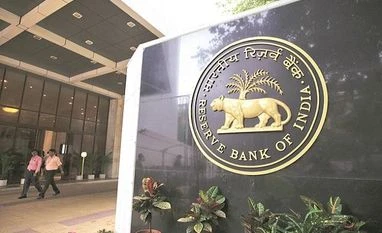
RBI
Starting the November issue of the monthly bulletin, the RBI will be presenting its assessment on the state of the economy every month
Anup Roy Mumbai
3 min read Last Updated : Nov 11 2020 | 10:34 PM IST
The Indian economy may have been badly hit by the Covid-19 pandemic, but the incoming data in October have “brightened the near-term outlook”.

If the momentum is maintained, the economy can turn around by the third quarter - a quarter earlier than expected - according to an assessment by several Reserve Bank of India (RBI) staff, including Deputy Governor Michael Patra.

Starting the November issue of the monthly bulletin, the RBI will be presenting its assessment on the state of the economy every month.

The RBI staff calculated that after a steep decline of 23.9 per cent in gross domestic product in the first quarter, the pace of contraction may have eased to 8.6 per cent in the second quarter.

Since the monetary policy review of October, “several developments point to a window of respite opening up and an unshackling of economic activity from the grip of Covid-19 as the festival season sets in,” states the report.

“The revival of economic activity is stronger than the mere satiation of pent-up demand released by unlocks and the rebuilding of inventories. If this upturn is sustained in the ensuing two months, there is a strong likelihood that the Indian economy will break out of contraction of the six months gone by and return to positive growth in the third quarter, ahead by a quarter of the forecast provided by the RBI,” it adds.

In India, the Covid-19 pandemic is receding, and people are engaging in economic activity. Favourable weather conditions are prevailing, and now, “there is a growing confidence that even if there is a second wave, the precipitous plunges of the first quarter may not recur because the brunt of the impact on contact-dependent industries and services has happened, and they are quickly adapting to a virtual normal.”

Demand is slowly coming back, as can be seen with increasing fuel and electricity consumption, sales of consumer durables, such as mobile phones, electronic goods, and automobiles, have increased. Goods and services tax collections also crossed Rs 1 trillion in October.

Importantly, employment has seen an increase, and “people are quickly restoring lost livelihood”.

With increasing demand, and contraction in exports, the trade deficit widened to $8.8 billion in October - the highest in the current fiscal year.

Supply improved in agriculture and manufacturing sectors, “while contact-intensive services are still lagging, indicative of a multi-speed recovery”.

“Cost-push pressures are likely to have been somewhat mitigated by the progressive easing of lockdowns, removal of restrictions on interstate movements of goods and migration of labour back to cities,” the report said.

Importantly, transmission of policy repo rate changes to deposit and lending rates has improved, reflecting the “combined impact of liquidity surplus, the accommodative monetary policy stance, the introduction of external benchmark-based pricing of loans, weak credit demand conditions, and lagged impact of policy rate cuts”.

Analysing 887 non-financial listed companies that have declared results so far, which represent about four-fifth of the market capitalisation of all such listed firms, the report says sales remained in contraction in the second quarter, but the pace moderated relative to the first quarter.

But expenses fell faster than sales “resulting in a sharp rise in operating profits after two consecutive quarters of contraction”.

Net profits rose “strongly” as other income rose.

Debt of manufacturing companies fell as they reduced their assets. Capital expenditure investment remained muted.

One subscription. Two world-class reads.

Already subscribed? Log in

Subscribe to read the full story →
*Subscribe to Business Standard digital and get complimentary access to The New York Times

Smart Quarterly

₹900

3 Months

₹300/Month

SAVE 25%

Smart Essential

₹2,700

1 Year

₹225/Month

SAVE 46%
*Complimentary New York Times access for the 2nd year will be given after 12 months

Super Saver

₹3,900

2 Years

₹162/Month

Subscribe

Renews automatically, cancel anytime

Here’s what’s included in our digital subscription plans

Exclusive premium stories online

  • Over 30 premium stories daily, handpicked by our editors

Complimentary Access to The New York Times

  • News, Games, Cooking, Audio, Wirecutter & The Athletic

Business Standard Epaper

  • Digital replica of our daily newspaper — with options to read, save, and share

Curated Newsletters

  • Insights on markets, finance, politics, tech, and more delivered to your inbox

Market Analysis & Investment Insights

  • In-depth market analysis & insights with access to The Smart Investor

Archives

  • Repository of articles and publications dating back to 1997

Ad-free Reading

  • Uninterrupted reading experience with no advertisements

Seamless Access Across All Devices

  • Access Business Standard across devices — mobile, tablet, or PC, via web or app

Topics :Reserve Bank of IndiaIndian EconomyEconomic recovery

Next Story


