Crisil expects adoption of 2Ws and 3Ws to rise by 2026 even without subsidies, due to parity of ownership cost with ICE vehicles.
“Considering the improving cost parity and the government’s focus on electrification of vehicles, we should not be surprised if EV penetration reaches 15 per cent in two wheelers, 25-30 per cent in three wheelers and 5 per cent in cars and buses by fiscal 2026 in terms of vehicle sales,” said Hemal Thakkar, director, CRISIL.
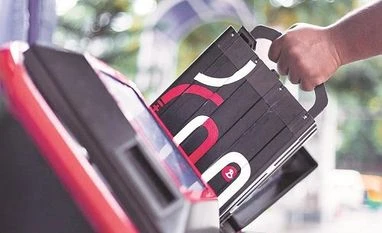
Several new trends and business models are expected to emerge as all that growth materialises. Battery-as-a-service and public charging stations, for one, typically have a pay-per-use model and aim to reduce the initial outgo of the customer, improve viability, address range anxiety and, in turn, increase asset utilisation. Mobility-as-a-service is yet another. It focuses on shared mobility by linking operations with charging infrastructure. Here, too, the vehicle and charging infrastructure are deployed on a pay-per-use model. Then there is micro-mobility, which provides last-mile distribution of cargo by way of micro-rental of electric 2Ws and 3Ws, operating on a self-drive rental model. The model is typically asset-light and based on open-source operations, where the user can hire and deploy vehicles.

 "EVs present an opportunity of almost Rs 3 trn for stakeholders: CRISIL")









