Factories running 30% below capacity: Rajan
He however held out hope that strong foreign capital flows will help rectify this weakness
Reuters Hong Kong The Reserve Bank of India’s (RBI) governor, Raghuram Rajan, said the economy was being hampered by a drop in public and private investments but held out hope that strong foreign capital flows would help rectify this weakness.
Weak capital investment has been a hurdle in India’s quest to realise its growth potential and with factories running 30 per cent below capacity, private companies are in no rush to invest in new projects.
“On the growth front, the central concern is with investments,” said Rajan, who was speaking at a business event in Hong Kong on Friday. “Private investment has fallen back quite a bit and so has public investment.”
RBI has cut its growth forecast for the current financial year to 7.4 per cent from 7.6 per cent previously, well below the government’s target of eight to 8.5 per cent, but still faster than China.
Despite the slowdown in growth and investments, Rajan said strong foreign direct investment (FDI) and some traction in infrastructure development could encourage private investments.
During the period from January to June, FDI flows into India rose to $19.4 billion, up 30 per cent from a year earlier, a sign of what the government called investors’ growing confidence in the country.
Earlier this month, India eased foreign direct investment norms in 15 major sectors, including mining, defence, civil aviation and broadcasting.
“We are seeing a lot of traction in FDI, in both announcements and actual investments on the ground,” Rajan said.
“Once we start seeing a little stronger demand, we will start seeing more projects being pulled out of the drawer.” The central bank cut the benchmark policy rate by a half percentage point to 6.75 per cent in September, after months of pleading by government leaders and industrial groups for more stimulus to stoke growth.
He declined to comment on the appropriate level of the Indian rupee, but said policy makers should guard against a debt build-up in the global economy in another swipe at quantitative easing policies pursued by global central banks.
Rajan has been an ardent critic of the ultra-easing policies of the Fed and other central banks, warning that cheap money was creating dangerous leverage in the global financial system and posed problems for emerging markets.
However, he said the global economy isn't likely to remain in a long period of sub-par growth.
"I would doubt this (low-growth) is a twenty-year phenomenon and I think we should be coming out of it," Rajan said.
"That is why we should be careful of creating an environment that leads to a significant creation of debt."

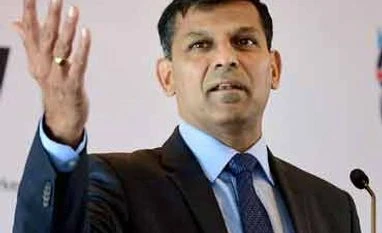 "Factories running 30% below capacity: Rajan")


 Connect with us on WhatsApp