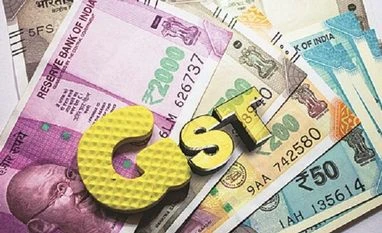
FinMin revises target for GST collection in FY20; aims mop-up at Rs 1.5 trn

The government aims to collect Rs 10,000 crore more than what was targeted earlier at a time when all months till December in FY20 yielded less than Rs 1.1 trillion, except for April

GST
Indivjal Dhasmana New Delhi
2 min read Last Updated : Jan 18 2020 | 12:29 AM IST
Weeks ahead of the Budget, the finance ministry has revised its target for goods and services tax (GST) collection in January and February — to Rs 1.15 trillion, from the earlier Rs 1.1 trillion. This would be achieved by detecting fraudulent input tax credit using data analytics. 

At a meeting convened by the Department of Revenue, under the finance ministry, the target for March was retained at Rs 1.25 trillion.

This means the government aims to collect Rs 10,000 crore more than what was targeted earlier at a time when all months till December in the current financial year (FY20) yielded less than Rs 1.1 trillion, except for April.

Last month, the target for December, January, February and March was set at Rs 1.1 trillion, with one of the months to yield Rs 1.25 trillion. However, the December collection stood at Rs 1.03 trillion. Four of nine months in FY20 so far have delivered less than Rs 1 trillion in GST collections. 

Parag Mehta, partner at NA Shah Associates, said, “Considering the sluggish economy, it is an ambitious target. Even during the festive period of Diwali, the collections could touch only Rs 1 trillion.”

The meeting, attended by senior officials of the Central Board of Indirect Taxes and Customs (CBIC) and the Central Board of Direct Taxes (CBDT), highlighted that the GST authorities would look into the mismatch of supply and purchase invoices, failure of filing returns, and over-invoicing, among other things, said sources. 

The authorities would also look at fake or excess refunds availed beyond the permissible limits, plugging tax leakages, fake or huge input tax credit (ITC) claims, and data analytic review of all the refund under inverted duty structure, the sources said.

Sources said that SMSs and emails will be sent to those claiming fraudulent or excess ITC, defaulters, non-filers and those who provide mismatched information in their returns or over-invoice or who have been identified through data analytics for evading tax by duping the system through rogue modus operandi. 

Taxpayers who have taken ITC wrongfully can voluntarily repay an amount equal to inadmissible credit before verification and punitive action is taken against them, the sources said.
It is further learnt that electronic communications to such people would be followed by visits from the GST field formations.

One subscription. Two world-class reads.

Already subscribed? Log in

Subscribe to read the full story →
*Subscribe to Business Standard digital and get complimentary access to The New York Times

Smart Quarterly

₹900

3 Months

₹300/Month

SAVE 25%

Smart Essential

₹2,700

1 Year

₹225/Month

SAVE 46%
*Complimentary New York Times access for the 2nd year will be given after 12 months

Super Saver

₹3,900

2 Years

₹162/Month

Subscribe

Renews automatically, cancel anytime

Here’s what’s included in our digital subscription plans

Exclusive premium stories online

  • Over 30 premium stories daily, handpicked by our editors

Complimentary Access to The New York Times

  • News, Games, Cooking, Audio, Wirecutter & The Athletic

Business Standard Epaper

  • Digital replica of our daily newspaper — with options to read, save, and share

Curated Newsletters

  • Insights on markets, finance, politics, tech, and more delivered to your inbox

Market Analysis & Investment Insights

  • In-depth market analysis & insights with access to The Smart Investor

Archives

  • Repository of articles and publications dating back to 1997

Ad-free Reading

  • Uninterrupted reading experience with no advertisements

Seamless Access Across All Devices

  • Access Business Standard across devices — mobile, tablet, or PC, via web or app

Topics :Nirmala SitharamanGST targetsApril GST collectionsGST collectionsFinance Ministry

Next Story