Home / Economy / News / Global fuel, commodity prices may soften going forward: NITI's Rajiv Kumar
Global fuel, commodity prices may soften going forward: NITI's Rajiv Kumar
Stating that the Union Budget does not stoke any inflationary pressure, NITI Aayog Vice Chairman Rajiv Kumar said the rise in international fuel and commodity prices may not continue going forward
Stating that the Union Budget does not stoke any inflationary pressure, NITI Aayog Vice Chairman Rajiv Kumar on Tuesday said the rise in international fuel and commodity prices may not continue going forward.
Delivering a lecture through a virtual platform on the Union Budget organised by the Administrative Staff College of India (ASCI) here, he said the global slowdown is largely due to the slowdown of the two largest economies, the US and China.
"The budget is not going to be inflationary. I don't think there is any inflationary bias to the budget. Yes, of course, there will be globally imported inflation. The IMF has said that global economy will slow down from 5.9 to 4.8 per cent. That slow down is largely, almost totally, the result of the slowdown of the two largest economies, the US and China," Kumar said.
"So, I think that particular pressure on commodity prices, including oil prices, would soften, would subside. Therefore, I expect that the fuel and commodity prices need not continue to rise as they have done in 2021," he further said.
The major concern, however, is food inflation which can be managed better through administrative and other measures, he said.
On the Budget, he said it seeks to lay a solid foundation for achieving a digitally-empowered India, with world-class infrastructure and global-level education and health sectors, in the next 25 years and it also aims to improve inclusion, and targets those at the bottom of the pyramid.
"I think the unifying theme for the budget is to lay the solid foundation for achieving our vision of a digitally-empowered India, with world class infrastructure and globally comparable education and health sectors in the next 25 years. I think this is the budget trying to lay the foundation for that," he said.
The focus of the budget has been to address the constraints which are in the way of the country grasping the opportunities of the fourth industrial revolution, he said.
The budget specifically mentions that other than innovation and sunrise sectors and frontier technologies, the government sees private investment as the principal driver of growth, he said.
He said innovation, investments, inclusion and integrity are the four pillars to the budget, talking about various aspects of the budget.
He also said employment can be generated through the acceleration of economic activity, especially in employment-intensive sectors like construction and infrastructure.
He added that the budget seeks to yank the country's economy out of the shadows of the pandemic and lay down the foundation for a vibrant future.
(Only the headline and picture of this report may have been reworked by the Business Standard staff; the rest of the content is auto-generated from a syndicated feed.)

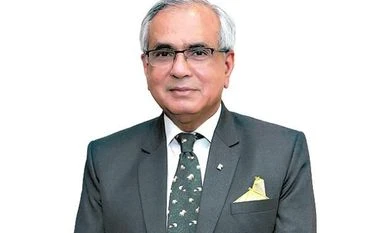 "Global fuel, commodity prices may soften going forward: NITI's Rajiv Kumar")


 Connect with us on WhatsApp