Govt believes in consensus, says PM
Tells Lok Sabha tampering with Constitution would be suicidal and diversity is India's strength
BS Reporter Prime Minister Narendra Modi spoke in the Lok Sabha on Friday on his commitment to the values of the country's Constitution and his desire to reach out to opposition parties.
In a 70-minute speech marking the conclusion to a two-day discussion in the chamber on the Constitution (Thursday was the anniversary of the day it was formally adopted in 1949), he ruled out any desire to review that basic document. And, said his government did not want to thrust decisions on anyone because it possessed a majority. It believed, he said, in building a consensus.
At the end of his speech, members across party lines, including Samajwadi Party chief Mulayam Singh Yadav and the Congress’ Mallikarjun Kharge, walked up to the PM and commended him on the speech.
Modi acknowledged the speech on Thursday by Congress president Sonia Gandhi. And, paid tribute to the contribution of leaders like Jawaharlal Nehru to the Constitution's drafting. On apprehensions that the government might try to alter the Constitution, for instance the use of terms like 'secular', Modi said, "Nobody can dare (such a course), as it will amount to suicide".
"There should be consensus. At least, efforts should be made for consensus...In this House, we are not going to force any decision but (will) make efforts for consensus...If nothing helps, then the ultimate is majority-minority," he said.
Several speakers had raised the issue of intolerance during the debate. Asaduddin Owaisi of the MIM charged Home Minister Rajnath Singh with trying to change the Preamble of the Constitution to pave the way for establishing a ‘Hindu Rashtra’. Mehbooba Mufti of the People's Democratic Party, took on those asking Muslims here to go to Pakistan. “Who are you to tell me to go to Pakistan? This country belongs to all of us…Please don’t repeatedly taunt people who have chosen India and rejected Pakistan,” she said.
In his reply, the PM said diversity was the strength of India. “For the government, the only dharma is India first, the only 'dharma granth' (holy book) is the Constitution," he said. Adding "Today's topic of discussion is not about 'I' and 'you' but about 'We' ”.
He said all previous governments and PMs have contributed in making India greater. He didn't refer directly to the issue of ‘intolerance’, instead speaking of how the Constitution had the strength to bind a diverse country as India. He lauded BR Ambedkar for having provided for reservations for deprived sections of society in the Constitution.

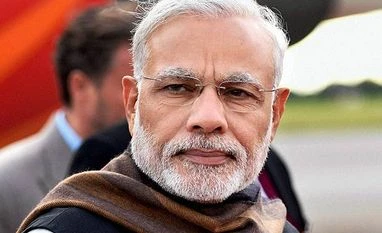 "Govt believes in consensus, says PM")


 Connect with us on WhatsApp