Govt favours diverting MEIS funds to PLI schemes in select sectors

The revenue department argued against continuing the MEIS, calling it inefficient and wasteful
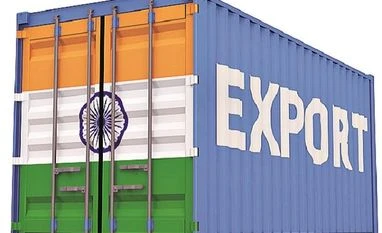
exports, imports, trade, FTA
Senior government sources say public tax liability under the MEIS ballooned from Rs 20,232 crore in 2015-16 to Rs 43,500 crore in 2019-20, becoming unsustainable
Subhayan Chakraborty New Delhi
4 min read Last Updated : Jul 31 2020 | 6:10 AM IST
Instead of extending the Merchandise Exports of India Scheme (MEIS), which cost Rs 43,500 crore in 2019-20, the finance ministry and the NITI Aayog have called for putting financial resources into new Production-Linked Incentive (PLI) schemes in select sectors with core competency and potential for global exports. The revenue department argued against continuing the MEIS, calling it inefficient and wasteful. It pointed to the runaway cost of maintaining the scheme, despite exports not growing at all.

Senior government sources say public tax liability under the MEIS ballooned from Rs 20,232 crore in 2015-16 to Rs 43,500 crore in 2019-20, becoming unsustainable. However, exports remained stuck at $313 billion in 2019-20 against $310 billion in 2014-15.

The Department of Revenue had in May asked the Directorate General of Foreign Trade to rein in MEIS allocation to Rs 9,000 crore for the current period, which ends on December 31, 2020. It has also pushed back heavily against commerce department requests to extend the scheme beyond that date.

The mega MEIS

Introduced in 2015 under the Foreign Trade Policy, the mega MEIS was created by merging five reward schemes. Initially, exporters earned duty credits at fixed rates of 2 per cent, 3 per cent, and 5 per cent, depending on the export of certain products to three sets of countries. While it originally covered 4,914 tariff lines, it currently covers 8,059, which constitute 75 per cent of all traded products.

“Gradually, the scope of the scheme got widened. The country differentiation was removed and MEIS rates were liberally increased. Over a period of time, MEIS was given at rates varying from 2-20 per cent. With such attractive investment, it was anticipated that exports would grow substantially and capture new markets. The MEIS liability continued to grow all these years as its coverage grew, the MEIS rate grew and rupee devalued,” said a person in the know.

The wide coverage of MEIS meant that resources are spread across a number of tariff lines without focus. Additionally, liabilities on accounts of MEIS have grown faster than the rate of growth of exports. However, the Federation of Indian Export Organisations has pointed out that sudden axing of the scheme would spell disaster for exporters big and small, who had already counted the scheme benefits into their cost outlay for the current financial year. 

Incentives for few

The government had decided to discontinue MEIS — its largest export promotion scheme — after the WTO said it distorted trade by providing direct subsidies. The organisation, in November 2019, ruled against India in its trade dispute with the US and asked it to stop all export promotion schemes within four months.

Foreseeing this, the government, in September 2019, had announced a new scheme named Remission of Duties or Taxes on Export Products (RoDTEP) to replace the MEIS for all goods exports. Officials say the scheme would be based on a similar formula as the MEIS, but the rates are yet to be decided. Also, the argument of cutting down on expenses may fall flat if the initial projected cost of Rs 50,000 crore worth of tax rebates holds true going forward.

Unlike MEIS, RoDTEP aims to support a few identified sectors where the government deems India to have competitive strength and assist companies to enhance their size and scale. Inter ministerial meetings have seen the NITI Aayog keenly backing this new approach which requires attracting investments in sectors of core competency to ensure efficiency and economies of scale.

Sources say as part of the plan, sector-specific PLI schemes have been introduced for electronics, pharma, medical equipment, but new ones are also in the pipeline for some other sectors.

One subscription. Two world-class reads.

Already subscribed? Log in

Subscribe to read the full story →
*Subscribe to Business Standard digital and get complimentary access to The New York Times

Smart Quarterly

₹900

3 Months

₹300/Month

SAVE 25%

Smart Essential

₹2,700

1 Year

₹225/Month

SAVE 46%
*Complimentary New York Times access for the 2nd year will be given after 12 months

Super Saver

₹3,900

2 Years

₹162/Month

Subscribe

Renews automatically, cancel anytime

Here’s what’s included in our digital subscription plans

Exclusive premium stories online

  • Over 30 premium stories daily, handpicked by our editors

Complimentary Access to The New York Times

  • News, Games, Cooking, Audio, Wirecutter & The Athletic

Business Standard Epaper

  • Digital replica of our daily newspaper — with options to read, save, and share

Curated Newsletters

  • Insights on markets, finance, politics, tech, and more delivered to your inbox

Market Analysis & Investment Insights

  • In-depth market analysis & insights with access to The Smart Investor

Archives

  • Repository of articles and publications dating back to 1997

Ad-free Reading

  • Uninterrupted reading experience with no advertisements

Seamless Access Across All Devices

  • Access Business Standard across devices — mobile, tablet, or PC, via web or app

Topics :MEISIndian exportsMerchandise exports

Next Story



