
Govt flooded with queries from counterparts on food stocks scheme
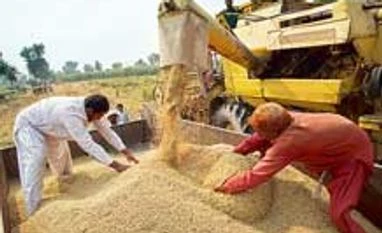
Most of these are from the US and European Union countries, on the nature of subsidies given to growers of wheat and rice
 "Govt flooded with queries from counterparts on food stocks scheme")
Explore Business Standard

Associate Sponsors
Co-sponsor
Most of these are from the US and European Union countries, on the nature of subsidies given to growers of wheat and rice
The government is being flooded with queries from several countries over the country's age-old food stockpiling programme, even as India and the US have agreed on way out of the imbroglio at the World Trade Organization (WTO).
Ever since India, under the new government, put its foot down at the multilateral forum for having an agreement on its public stockholding programme in parallel with the Trade Facilitation Agreement (TFA), several governments have rushed queries to the ministry of commerce and industry, which has forwarded those to the ministry of agriculture.
Most of these are from the US and European Union countries, on the nature of subsidies given to growers of wheat and rice, officials in both ministries told Business Standard.
There have been queries on the nature of crops, details on public stock holding and the major crops stored in government warehouses, the time lengths for storage and the like.
"We have been directed to promptly reply to the questions, as any delay could raise questions on India's credibility," said an official in the department of agriculture and cooperation, on condition of anonymity.
The departments of food and public distribution have been asked to address queries on the amount of subsidies given by way of Minimum Support Price to farmers, which are otherwise prohibited under WTO rules.
The number of queries from some other countries such as Canada and Australia have soared since India notified to WTO its farm subsidies at $56 billion over the seven years from 2004-05 till 2010-2011, as proof that it had not breached the prescribed limit of 10 per cent on such help.
As a result, India had been bombarded with questions on the method of calculating these and the conversion rate used for the dollar to the rupee.
Some other queries also relate to the number of poor farmers in India, the classification we follow for determining these and how subsidies are divided between rich and poor growers. Officials said many a time, a reply to one query is followed by various counter-questions.
However, on Thursday, India and the US resolved their ongoing dispute over food security and paved the way for early implementation of the TFA. The latter seeks to ease global Customs norms and faster movement of goods across borders.
First Published: Nov 14 2014 | 6:32 PM IST

