Demonetisation, GST: Will small traders lose their ardour for the BJP?

Small traders have been bitten twice by its govt in quick succession through note ban and GST
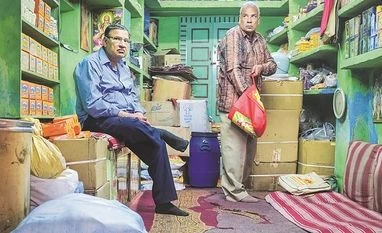
Will small traders lose their ardour for the BJP?
Small shopkeepers
Ajaz Ashraf | Scroll.in
Last Updated : Jul 10 2017 | 1:57 AM IST
Steadfast supporters of the Bharatiya Janata Party, Small traders have been bitten twice by its government in quick succession. In November, demonetisation sent them scurrying around to exchange their invalidated currency notes for new ones at a hefty discount.

Eight months later, small traders are agitated about the goods and services tax (GST). Apart from its complex mechanism to file returns, and several slabs of taxes, they are angry because GST has now criminalised economic offences.

Unlike in the past, anyone who is deemed to have evaded taxes between Rs 2 crore and Rs 5 crore will be held guilty of having committed a non-cognisable offence. Tax evasion above Rs 5 crore will be considered a cognisable offence – traders accused of this can be arrested without a warrant. Similarly, a person convicted once for either a cognisable or non-cognisable offence can be arrested for evading tax of any amount. Such stringent provisions could ensure tax compliance and swell the state’s revenue.

But then, as many traders point out, they depend on chartered accountants to file their returns, either because they lack the requisite skills or are pressed for time, more so now as GST requires filing of tax returns three times a month.

This means that a trader is liable to be punished for their chartered accountant’s mistakes, and a genuine difference in the interpretation of a GST provision between the trader and the tax authority can also be criminalised – and punished.

Arun Singhania, president, Delhi Hindustani Mercantile Association, said, “Traders feel that GST presupposes that they are thieves. We have been stigmatised.”

Small traders are hurt that Prime Minister Narendra Modi has used GST to portray them as tax evaders. Such an argument could have the poor blame their woes on traders, turning them into an object of hate.

BJP can turn against small traders because they may have wealth in comparison to others around them, but do not have the numbers to constitute a substantial voting group. For instance, the Vaishyas, who dominate the trading group, were just 2.7 per cent of the country’s population in the 1931 census, the last census in which caste data was collected and made public.

With the BJP expanding rapidly, traders now constitute a fraction of those who vote for the party. So will they continue to stick with the BJP, which has not reciprocated their ardour? To get an answer, let us turn to Surat, which has become the hotbed of the agitation against GST.

Jaylal, the president of the Surat Vividh Vyapari Mahamandal, which organised an agitation to demand the withdrawal of 5 per cent GST on textiles, said, “This is the first time in the history of post-Independence India that tax has been imposed on us,” Jaylal said.

Alienated traders and angry Patels, who are demanding caste-based reservations for their community, could together put the skids under the BJP in the state. As such, in the 2012 Assembly elections, the Congress had a marginal lead over the BJP in rural constituencies. Jaylal’s calculations also tell you a thing about traders – they are just not numerous enough to matter on their own electorally. True, even a large social group cannot swing an election on its own.

But to end up on the losing side matters more to traders than any other occupational group. Jaylal is pragmatic enough to admit: “If we are convinced in advance that the BJP will return to power, most traders will vote for it. After all, any government can make our lives miserable.”

Gaurang Bhagat, president, New Cloth Market and Maskati Mahajan, Ahmedabad, said: “Traders are angry but only time will tell whether it would lead to their deserting the BJP.”

There are two reasons why the palpable unhappiness of traders might not lead to them irrevocably breaking from the BJP.

For one, Opposition parties have not courted traders believing that they are too bound to the BJP to desert the party en masse. “During the UPA days, BJP leaders would accompany traders to make representations to the government,” said the exporter. “Have you seen Opposition leaders do the same now? Every movement needs a charismatic leader to lead it. Traders have none.”

The second reason is that traders will not openly express their anger until they are sure a united Opposition or a leader from its ranks can vanquish Modi. 

“Traders built the BJP and Modi,” said Gaurav Kapoor, an entrepreneur in Varanasi. “But they [the BJP] now have the support of corporate magnates awash with funds and media tycoons who plug them. Now that the BJP is wooing Dalits and lower OBCs (Other Backward Castes), small traders are just not needed to cobble together a winning electoral arithmetic.”
By arrangement with Scroll.in. (This is an abridged version) 

One subscription. Two world-class reads.

Already subscribed? Log in

Subscribe to read the full story →
*Subscribe to Business Standard digital and get complimentary access to The New York Times

Smart Quarterly

₹900

3 Months

₹300/Month

SAVE 25%

Smart Essential

₹2,700

1 Year

₹225/Month

SAVE 46%
*Complimentary New York Times access for the 2nd year will be given after 12 months

Super Saver

₹3,900

2 Years

₹162/Month

Subscribe

Renews automatically, cancel anytime

Here’s what’s included in our digital subscription plans

Exclusive premium stories online

  • Over 30 premium stories daily, handpicked by our editors

Complimentary Access to The New York Times

  • News, Games, Cooking, Audio, Wirecutter & The Athletic

Business Standard Epaper

  • Digital replica of our daily newspaper — with options to read, save, and share

Curated Newsletters

  • Insights on markets, finance, politics, tech, and more delivered to your inbox

Market Analysis & Investment Insights

  • In-depth market analysis & insights with access to The Smart Investor

Archives

  • Repository of articles and publications dating back to 1997

Ad-free Reading

  • Uninterrupted reading experience with no advertisements

Seamless Access Across All Devices

  • Access Business Standard across devices — mobile, tablet, or PC, via web or app

Next Story



