Help Dalits start business to achieve equality: Rajan
Says those who can pay back student loans should, those who can't should be forgiven
Arup Roychoudhury Greater Noida Reserve Bank of India Governor Raghuram Rajan on Saturday said making it easier for Dalits to start businesses would be more effective in bringing about social equality than any affirmative action.
“Indeed, making it easy for Dalits to start businesses may do more for their social status because money empowers than many other forms of affirmative action. Rather than prohibiting the use of money and wealth, let us think about increasing society’s tolerance for its use,” he said, addressing the convocation ceremony of Shiv Nadar University in Greater Noida.
Cautioning against growing inequalities in the country, Rajan also cautioned against growing inequalities within countries, even as it is diminishing between the nations. He emphasised on the role of education and health care to restore faith in markets in these circumstances. He talked of different kind of tolerance in society, about the virtues of money and took on the criticism of money by US political scientist Michael Sandel in his book What Money Can't Buy: the Moral Limits of the Market. Rajan pointed out that money is a great equaliser. Helping Dalits start businesses would do more benefits to them than any other affirmative action.
“Today, even well-run market economies seem to be favouring those who already have plenty... The income inequality is on the rise, with some having colossal incomes and others worrying about the next meal,” he said.
In his address, “Money and Education”, the RBI governor attributed the growing inequalities partly to skills and capabilities that have become much more important in well-paid jobs. As such those born in good circumstances have a much better chance at acquiring these.
“The winner-take-all nature of many occupations, where a few of the most capable entrepreneurs and the best workers take most of the income (think apps, architecture or acting, for example) accentuates the value of early childhood preparation. Hence, the benefit of being born to the right parents in the right community,” the RBI governor said. As a solution, he said, we have to work to provide effective access to schooling and health care for all, a non-discriminating job market with many jobs, equal opportunities for further advancement regardless of gender, race or background. All this will increase the perceived legitimacy of wealth and society’s willingness to broaden the areas where it is spent.
Thoughtful philanthropy can further help enhance society’s acceptance of great wealth, he said. The RBI governor’s observations are important also in the light of the International Monetary Fund’s (IMF) recently warning to India and China, the two fastest growing large economies, about rising inequalities. Rajan countered many observations of Sandel about money. He said while Sandel’s real concern is perhaps with the unfair distribution of money, he seemed to have ignored the virtues of anonymity in money.
In a free market, all it takes to buy what you want is money. “You do not need a pedigree, a great family history, the right table manners, or the right fashionable clothing or looks,” he said. He also said India needs to have a more “contingent student loan system” which needs to differentiate between those who can repay their loans and those who cannot. Such a system would prevent an US-like education loan crisis in India, he added.
“Given the need to broaden access to all the deserving, we have to make degrees affordable. One part of the solution is student loans, but we have to be careful that student loans are repaid in full by those who have the means, while they are forgiven in part for those who fall on bad times, or those who take low-paying public service jobs,” Rajan said.
“We should also make sure that unscrupulous schools do not prey on uninformed students, leaving them with high debt and useless degrees,” he said. Popular among young people, Rajan was mobbed for selfies and autographs by students after the ceremony.
According to reports, unpaid student debt could be as high as $1.2 trillion as of January 2016.

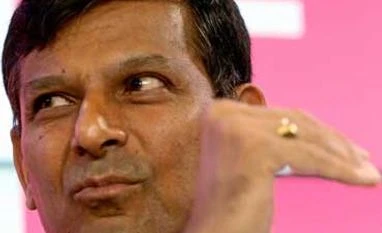 "Help Dalits start business to achieve equality: Rajan")


 Connect with us on WhatsApp