How the bank recap will play out

Govt's plan will have little impact on its target to shrink the shortfall to 3.2% GDP in the year through March 2018
How the bank recap will play out
Anirban Nag | Bloomberg
Last Updated : Oct 26 2017 | 2:24 AM IST
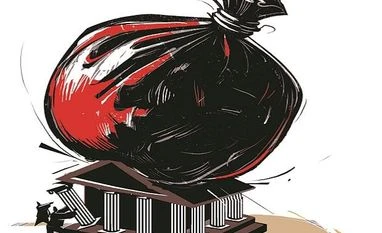
Prime Minister Narendra Modi’s administration will inject an unprecedented Rs 2.11 lakh crore into struggling state-run banks over the next two years, his biggest attempt to revive growth.

Morgan Stanley is calling this India’s TARP — a reference to the US Troubled Asset Relief Program implemented in the throes of the financial crisis — and Indian stock markets welcomed the decision but bond investors were more circumspect.

Here’s how it may roll out:

Impact on fiscal deficit

The government’s plan will have little impact on its target to shrink the shortfall to 3.2 per cent of GDP in the year through March 2018 because the IMF’s rules classify such debt as “below-the-line” financing. Only interest expense will be added to the fiscal deficit, and this is estimated at about Rs 90 billion each year or 0.4 per cent of total budgeted spending. Technically, however, India’s accounting rules require the bonds to be included in the budget deficit, so the government will probably reclassify them later as off-balance sheet items—just as it did when similar notes were issued in the 1990s—according to Kotak Mahindra Bank.

Will it spur lending?

Not immediately. Any pick-up is likely only after banks’ balance sheets have been materially strengthened, which would include cleaning up some $191 billion of stressed assets. Moreover private demand — which has been subdued over the past few years — has to recover for loan growth to revive from two-decade lows, analysts Manish Shukla and Abhishek Sahoo of Citigroup Global Markets India said in a note. CRISIL expects the capex cycle to revive in the year starting 1 April 2018, and CLSA says the government’s plan should help satisfy more than 70 per ecnt of lenders’ needs for lending to increase, absorbing “haircuts” on stressed loans.

What about monetary policy?

The government is yet to disclose details on the structure and pricing of the bonds, as well as how it will raise the rest of the cash. These will determine if there’s a liquidity squeeze. If the measures do revive credit growth, inflation may accelerate as well, limiting scope to lower the policy rate, said Indranil Pan, chief economist at IDFC Bank. The government’s plan will front-load capital injections while staggering the attendant fiscal implications over a period of time, Reserve Bank of India governor Urjit Patel said in a statement.

Who will buy these bonds?

If one goes by history, banks themselves—flush with deposits following Modi’s cash ban—will be buyers of the debt. “Banks can cleverly invest these funds in the recap bonds which will ultimately be routed back as equity in the system,” said Vivek Kulkarni, managing director at Brickwork Ratings. “This step will also ensure that bond market will not be impacted by such a large issuance for the private sector issuers.” In 1994, India had sold about Rs 4,800 crore of 12-year recapitalisation bonds at a coupon rate of 10 per cent, according to data compiled by Bloomberg.

What are rating companies saying?

Fitch Ratings and Moody’s Investors Service have both welcomed the announcement, with the latter describing the move as a “significant credit positive” for Indian state-run banks. Rating companies have long criticised India’s weak banking sector and as of Tuesday, Fitch had a negative outlook on Indian banks based on its assessment of the sector’s weak core capitalisation. Moody’s highlighted significant capital shortfalls at several banks, while assigning a stable outlook to the banking system.

One subscription. Two world-class reads.

Already subscribed? Log in

Subscribe to read the full story →
*Subscribe to Business Standard digital and get complimentary access to The New York Times

Smart Quarterly

₹900

3 Months

₹300/Month

SAVE 25%

Smart Essential

₹2,700

1 Year

₹225/Month

SAVE 46%
*Complimentary New York Times access for the 2nd year will be given after 12 months

Super Saver

₹3,900

2 Years

₹162/Month

Subscribe

Renews automatically, cancel anytime

Here’s what’s included in our digital subscription plans

Exclusive premium stories online

  • Over 30 premium stories daily, handpicked by our editors

Complimentary Access to The New York Times

  • News, Games, Cooking, Audio, Wirecutter & The Athletic

Business Standard Epaper

  • Digital replica of our daily newspaper — with options to read, save, and share

Curated Newsletters

  • Insights on markets, finance, politics, tech, and more delivered to your inbox

Market Analysis & Investment Insights

  • In-depth market analysis & insights with access to The Smart Investor

Archives

  • Repository of articles and publications dating back to 1997

Ad-free Reading

  • Uninterrupted reading experience with no advertisements

Seamless Access Across All Devices

  • Access Business Standard across devices — mobile, tablet, or PC, via web or app

Next Story



