In 2022, the goal will be to ramp up public health infrastructure

The first of the year-ender series takes a dive into the health care crisis that India faced this year and what's in store as 2022 rings in
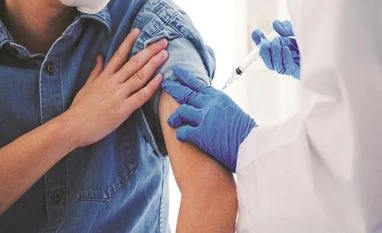
vaccination
But even with the uncertainty over the course of the pandemic, the discussion on healthcare is changing
Ruchika Chitravanshi New Delhi
5 min read Last Updated : Dec 21 2021 | 1:52 PM IST
The year gone by was a litmus test for India’s health infrastructure, laying bare not just the chinks in the armour, but the glaring gaps in its health delivery system. The second wave of the Covid-19 pandemic in the months of May and June 2021 revealed just how unprepared the country was to tackle the dizzying number of hospitalisations, or even to provide basic oxygen support to patients with severe disease.

But now India is much better prepared, say public health experts. According to them, the first six months of 2022 will continue to see the stress on wearing masks and social distancing. Vaccinations - for children, and boosters for the fully vaccinated — are likely to be the big themes next year. 

“We have to do everything to avoid a super spreader event. People now recognise that investment in health is important. But efforts must be strengthened much more,” said K Srinath Reddy, president of the Public Health Foundation of India. 

With the pandemic continuing to rage around the world — the rapid spread of the Omicron variant is the latest worry — vaccine manufacturers are now trying to develop vaccines suited to combat the variants, alongside cures for Covid-19.

But even with the uncertainty over the course of the pandemic, the discussion on healthcare is changing. 

“The pandemic has exposed considerable weaknesses in supply chains across the globe and compelled the pharma and healthcare sectors to revisit their strategy and shift away from a ‘just in time’ to a ‘just in case’ approach,” said Karan Singh, managing director, ACG, one of the world’s leading pharmaceutical manufacturers.  

He said that in 2022 and beyond, India will see the rise of new delivery models built on a resilient value chain by leveraging the benefits of digitalisation. 

Many in the industry expect the healthcare sector to attract significant investments as there is an increased consumer demand for better health outcomes. “Health will continue to be at the centre of the government's attention as it underpins economic recovery and our collective well being,” said Harsh Mahajan, president, NATHEALTH- Healthcare Federation of India, an apex healthcare body.

However, public health experts are concerned that investments in health, particularly public health, will depend on economic growth and competing demands on government resources, given that key state elections are coming up next year. 

The government is therefore trying to insulate health by taking a $1.5 billion loan from the World Bank and the ADB to support its plan to build district hospitals, laboratories and strengthen public health infrastructure. “These loans are performance-based, which means that the government will need to spend first, and implement other non-fiscal conditionalities to be eligible for the money,” said Sujatha Rao, former health secretary.  

Since a lot could depend on the liquidity in the economy, Rao said that this should not result in deepening the privatisation of the health sector.  

“In the absence of effective social security, it will entail further immiseration due to health costs and also a cut-back on consumption,” she added.

India’s per capita out-of-pocket expenditure on health declined from Rs 2336 in 2013-14 to Rs 2097 in 2017-18, according to the recent national health accounts estimates. But health experts believe that this number would have risen considerably in the pandemic year and could continue to rise, given that the pandemic is nowhere near ending. 

After the disastrous second wave, the government has focused its attention on ramping up oxygen, ventilators and ICU beds capacity in the country. But in 2022, home care and primary health care systems may need more attention, especially in peri-urban and rural areas. As Reddy said, “Surveillance systems and emergency transport systems have to be ramped up. District hospitals have to push the pedal on these things and act faster.” 

Also, if vaccination goals are achieved and the Omicron threat is overcome, the health sector is hoping to focus on other health issues such as tuberculosis that have taken a back seat due to the pandemic. 

“I would also hope that the increased awareness of preventive and promotive health, the focus on hygiene and social distancing and the willingness to adopt digital technology in accessing or delivering care, would sustain in the years ahead,” Dilip Jose, MD and CEO, Manipal Hospitals, said. 

Recent industry studies point to a similar trend. For example, a PwC report on India’s health sector said that the Covid-19 pandemic has accelerated the adoption of digital technologies in the healthcare segment as companies look for alternate models of delivering care and gaining better insights on disease management. 

“Digital health has a bright future in India, and we will see digitally-enabled services speed-rolling phenomenally in the next three to five years. We will see more AI-based startups which are expected to make healthcare more accessible than ever,” said Ashutosh Raghuvanshi, MD and CEO, Fortis Healthcare.

One subscription. Two world-class reads.

Already subscribed? Log in

Subscribe to read the full story →
*Subscribe to Business Standard digital and get complimentary access to The New York Times

Smart Quarterly

₹900

3 Months

₹300/Month

SAVE 25%

Smart Essential

₹2,700

1 Year

₹225/Month

SAVE 46%
*Complimentary New York Times access for the 2nd year will be given after 12 months

Super Saver

₹3,900

2 Years

₹162/Month

Subscribe

Renews automatically, cancel anytime

Here’s what’s included in our digital subscription plans

Exclusive premium stories online

  • Over 30 premium stories daily, handpicked by our editors

Complimentary Access to The New York Times

  • News, Games, Cooking, Audio, Wirecutter & The Athletic

Business Standard Epaper

  • Digital replica of our daily newspaper — with options to read, save, and share

Curated Newsletters

  • Insights on markets, finance, politics, tech, and more delivered to your inbox

Market Analysis & Investment Insights

  • In-depth market analysis & insights with access to The Smart Investor

Archives

  • Repository of articles and publications dating back to 1997

Ad-free Reading

  • Uninterrupted reading experience with no advertisements

Seamless Access Across All Devices

  • Access Business Standard across devices — mobile, tablet, or PC, via web or app

Topics :CoronavirusOmicronHealth sectorpublic healthVaccinationHealthcare sector

Next Story



