In first paper for RBI, Raghuram Rajan warns against beggar-thy-neighbour monetary policies
A working paper co-authored by Prachi Mishra and Rajan caution that unconventional monetary policy could lead to adverse spillover effects
BS Reporter Mumbai In a working paper released on Monday, Reserve Bank of India’s (RBI) Prachi Mishra and Governor Raghuram Rajan said the pressure to avoid a consistent breach of the lower inflation bound and the need to restore growth to reduce domestic unemployment could cause a country’s authorities to look to unconventional monetary policies, as well as on exchange rate or financial market interventions/repression.
These, the paper warns, may have large adverse spillover effects on other countries, which then could resort to aggressive policies to gain even small positive domestic effects.
Consequently, the world may embark on a sub-optimal collective path, the researcher duo wrote in the paper titled ‘Rules of the Monetary Game’.
While Rajan is the governor of RBI, Mishra is specialist adviser in the Department of Economic and Policy Research in the central bank.
“Perhaps instead, countries could agree to guidelines for responsible behavior that would improve collective outcomes,” the duo wrote.
Rajan has been sounding his concern over such beggar-thy-neighbour policies and its spillover effects in various speeches, but this is the first time that he has written a working paper for RBI in his tenure as governor, and that, aimed at his fellow central bankers across the world.
“The bottom line is that simply because a policy is called monetary, unconventional or otherwise, it may not be beneficial on net for the world. That all monetary policies have external spillovers does not mean that they are all justified. What matters is the relative magnitude of demand creating versus demand switching effects, and the magnitude of other net financial sector spillovers, that is, the net spillovers,” the paper warned.
“Easy monetary conditions in advanced economies can lead to capital inflows, exchange rate appreciation, rapid credit growth, and asset price bubbles in emerging markets (EMs). On the other hand, monetary normalization, or a rise in interest rates in advanced economies can cause capital outflows and exchange rate depreciation in the EMs,”it added.
According to the paper, a new rule needs to be created broadly rated based on analytical inputs and discussion. There should be separate ratings for policies that have fewer adverse spillovers, or the ones that need to be temporarily adopted, or avoided at all cost. However, the tools that economists have right now do not allow them to rate such policies.
The prevalent global economic models provide a useful framework to understand spillovers, but are complicated with multiple sectors, regions, and parameters, while not being country specific. Moreover, the predictions from these models are not sufficiently clear-cut, and often depend on the underlying assumptions.
“The dangers from applying these models for policy purposes could perhaps be significant. For example, the choice of scenarios that are played up prominently in policy documents could be tinged by ideology.”
To proceed to make a new global model, countries should proceed with eminent academics, there should be international seminars and discussions on the subject, and International Monetary Fund should be involved.
“There can be no more important issue to understand and discuss than the international spillovers of domestic policies. Such a discussion need not take place in an environment of finger pointing and defensiveness, but as an attempt to understand what can be reasonable, and not overly intrusive, rules of conduct,” the paper concluded.

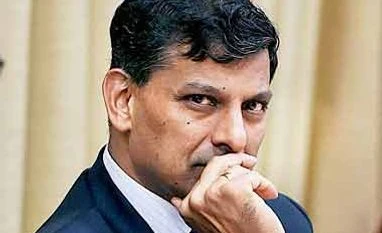 "In first paper for RBI, Raghuram Rajan warns against beggar-thy-neighbour monetary policies")


