
India's monopoly to end as Nepal gets trade point in China
China has agreed to explore oil, gas resources in Nepal and will provide all technical and economic support for it
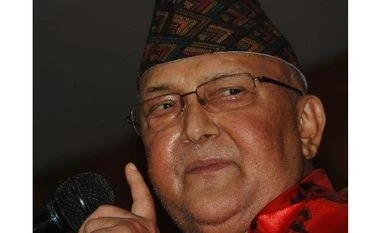 "India's monopoly to end as Nepal gets trade point in China")
WebinarsNew
Deep DiveNew
Explore Business Standard
China has agreed to explore oil, gas resources in Nepal and will provide all technical and economic support for it
Stung by the bitter lessons from Madhesi blockade of India trade points that caused acute fuel shortage, Nepal on Monday signed a transit and transportation treaty with China for its third-country commerce -- a move that is likely to end New Delhi's monopoly over the landlocked Himalayan nation's trade through Haldia port in Kolkata.
The two countries signed the agreement along with nine other treaties in Beijing, a day after Nepal Prime Minister K.P. Sharma Oli began a week-long trip to China. Oli's maiden visit as the Nepal prime minister comes at the invitation of his Chinese counterpart Li Keqiang.
The visit is significant in the light of Nepal's efforts to reduce its decades old dependence on India after Madhesi protestors in southern plains, agitated over the the new Constitution, blocked supply trucks coming in from the southern neighbour.
The five-month long blockade caused huge crises as fuel and medicine supplies dried up. Kathmandu blamed New Delhi for supporting the protestors but the allegation has been denied. The blockade halted for months Nepal's third-country trade, apparently prompting the Nepalese government to look for an alternative to the Haldia port.
The transit agreement with China gives Nepal an option to use the next nearest Tianjin port in China that is 3,000 km from Nepal border. India's Haldia port is 1,000 km away.
However, there are concerns that Nepal cannot immediately use the Chinese port as infrastructure in the tiny country is poor and the Chinese side is located at a higher altitude.
Other important agreements signed during Oli's visit on Monday include an accord on the construction of a bridge in Hilsa, far west Nepal, that will connect the republic with Tibet. Hilsa was a traditional trade route to Nepal.
China has also pledged $216-million soft loan to Nepal for construction of a regional airport in the second largest city of Pokhara, some 200 km from Kathmandu.
The two neighbours also signed a Free Trade Agreement (FTA) to boost the bilateral trade. China has also agreed to explore oil and gas resources in Nepal and will provide all technical and economic support for it.
One of the commercial banks in China has also agreed to open its office in Nepal. Similarly, Nepalese banks can also open their branches in China.
China has also agreed to help in installation of solar panels in 32,000 Nepalese households.
Agreements in the fields of science and technology, sister-city relations between various Nepalese and Chinese cities, and establishment of Nepal's Consular General Office in Chengdu, China, were also signed, said Gopal Khanal, foreign relations expert to Prime Minister Oli.
First Published: Mar 21 2016 | 2:59 PM IST


