India's trade deficit with China doubled to $48.6 bn in FY20: Motilal Oswal

Several sectors have material linkages with China, making it important to understand the sector-wise implications
Officials said DGTR could now feel more confident in using the strict test in anti-dumping investigations.
In the short-to-medium term, deep inter-linkages of several sectors preclude any meaningful retaliation on the trade front, said the report.
ANI
2 min read Last Updated : Jun 25 2020 | 5:47 PM IST
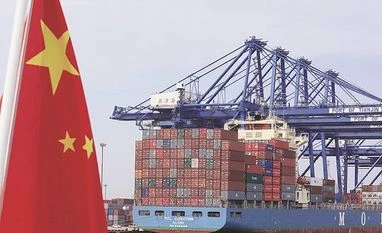
India's trade deficit with China more than doubled from 20 billion dollars in FY10 to 48.6 billion dollars in FY20, implying massive surge in dependence on Chinese products, Motilal Oswal Financial Services said on Thursday.

Following the border skirmishes between India and China, the recent narrative has sparked debate around India's boycott of Chinese products. Unless dependence is reduced, a cold shoulder by India may not be feasible, it said in a report.

Several sectors have material linkages with China, making it important to understand the sector-wise implications. Auto, consumer durables, pharmaceuticals, telecom, chemicals and renewable power sector (solar) seem to be the most dependent in terms of sourcing from China.

Also, said the report, there appears to be a lack of alternative suppliers in many cases at the same scale or costs. While consumer durables are dependent on China for components, pharma is dependent for active pharma ingredient (API) sourcing.

Telecom is dependent on China from a network standpoint as well as for 4G smartphone handsets as China caters to more than 75 per cent of the Indian handset demand.


Various sectors have material inter-linkages with China and form a critical part of the supply-chain for many firms in India.

"Any potential escalation between the two nations could increase operational and supply-chain risks in the current economic backdrop even as economies look to recover from the pandemic," said the report.

"Overall, it will be difficult and expensive for Indian firms to immediately find alternative suppliers. Structural reforms are crucial for manufacturing competitiveness and reducing long-term dependence on China."

In the short-to-medium term, deep inter-linkages of several sectors preclude any meaningful retaliation on the trade front, said the report.

However, as the world looks to de-risk its supply-chain from China given the backdrop of the Covid-19 pandemic from a long-term perspective, the need for emphasis on Indian manufacturing gets reinforced now.

Further, the Indian government has also announced several measures to drive self-dependence in various aspects (Atmanirbhar Bharat).

For a sustained change, however, structural reforms encouraging manufacturing (ease of doing business, ease of compliance burden, etc) and market reforms (land, labour and capital) will augur well to augment India's manufacturing competitiveness.

One subscription. Two world-class reads.

Already subscribed? Log in

Subscribe to read the full story →
*Subscribe to Business Standard digital and get complimentary access to The New York Times

Smart Quarterly

₹900

3 Months

₹300/Month

SAVE 25%

Smart Essential

₹2,700

1 Year

₹225/Month

SAVE 46%
*Complimentary New York Times access for the 2nd year will be given after 12 months

Super Saver

₹3,900

2 Years

₹162/Month

Subscribe

Renews automatically, cancel anytime

Here’s what’s included in our digital subscription plans

Exclusive premium stories online

  • Over 30 premium stories daily, handpicked by our editors

Complimentary Access to The New York Times

  • News, Games, Cooking, Audio, Wirecutter & The Athletic

Business Standard Epaper

  • Digital replica of our daily newspaper — with options to read, save, and share

Curated Newsletters

  • Insights on markets, finance, politics, tech, and more delivered to your inbox

Market Analysis & Investment Insights

  • In-depth market analysis & insights with access to The Smart Investor

Archives

  • Repository of articles and publications dating back to 1997

Ad-free Reading

  • Uninterrupted reading experience with no advertisements

Seamless Access Across All Devices

  • Access Business Standard across devices — mobile, tablet, or PC, via web or app

Topics :India trade deficitMotilal OswalIndian Economy

Next Story


