In a market where cars remain a luxury, India’s push to electrify transport has focused on scooters, motorized bicycles, and rickshaws. By 2030 more than 80% of the two-wheelers sold in the country could be battery-powered, according to Nitin Gadkari, minister for road transport and highways. Today almost half of all three-wheelers sold are electric, says Rishabh Jain of the New Delhi-based nonprofit Council on Energy, Environment and Water. Battery swapping for smaller vehicles is becoming popular in Bengaluru, Mumbai, and other space-constrained, crowded cities.
Instead of a carbon market that makes companies pay for every ton of carbon dioxide they emit—such as the one governed by the European Union—India in 2008 launched a program that forced energy-intensive industries to become more efficient. Companies that use less energy than set targets can trade the savings as credits. Cutting energy use means reducing carbon emissions, too. The program saved 87 million metric tons of CO₂ in 2020, about the same as Bangladesh’s annual footprint, and many everyday goods are adorned with energy-efficiency labels showing how well they conserve power.

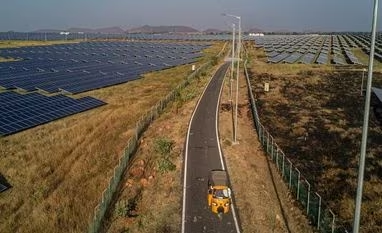 "India, the poorest of super-emitters, needs a different path to net-zero")










 Connect with us on WhatsApp