The redevelopment of Asia’s largest slum cluster is set to be a protracted enterprise. The Dharavi Redevelopment Authority has not received any bids, despite a third extension till July 31. The redevelopment entails an investment of Rs 22,000 crore. The project has been in the works for 12 years.
A senior government official said the government was in the midst of preparing another plan, should bids fail to turn up before the closing date. The government might then consider redevelopment along the lines of the slum rehabilitation scheme.
According to the slum rehabilitation scheme, the builder will have to procure consent of 70 per cent of slum dwellers, who will then be rehabilitated gratis in new buildings on a portion of a plot. Each eligible slum dweller will get a 350 sq ft home. As compensation, the builder will receive additional construction rights to build luxury towers and sell these in the open market.
The official said a decision was awaited in this regard. Dharavi has been carved up into five sectors, one of these being developed by state-run Maharashtra Housing and Area Development Authority. A 20-storey tower has already been built to house 354 slum dwellers. Two more 20-storey towers are being constructed.
Knight Frank Executive Director Gulam Zia said various attempts to redevelop Dharavi have come to naught for some reason or the other. “The need of the hour is to analyse the earlier failed attempts and learn a lesson before deciding on a strategy. Specific needs of residents, the continuation of a flourishing economy, high population density pose serious challenges to the viability of the redevelopment on a public-private partnership model.”
While a solution will be tenuous, we cannot ignore its people, while we embark on the construction of 100 smart cities all over the country.”
According to Cushman & Wakefield Managing Director (Mumbai) Gautam Saraf, the Dharavi redevelopment project can materialise only if there is strong collaborative effort by the government. A special project division for Dharavi has to be created, with an independent third party overseeing this body. This will purportedly act as a tribunal.
“Dharavi needs a rehabilitation plan for 700,000 to a million people. Also, since it is home to various industries — textiles, pottery, jewellry, leather, steel — and a very large indigenous recycling business, there needs to be a robust plan to reinstate these small-scale industries. While it is centrally located, Dharavi will require further infrastructural enhancement. The current road space is not enough to sustain development or the anticipated increase in traffic,” said Saraf.

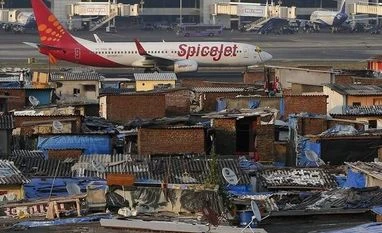 "Lack of bids delay Dharavi facelift")


 Connect with us on WhatsApp