Farmers shifting out of pulses, oilseeds due to low realisation

Acreage of these crops is likely to fall as prices drop below MSP in mandis
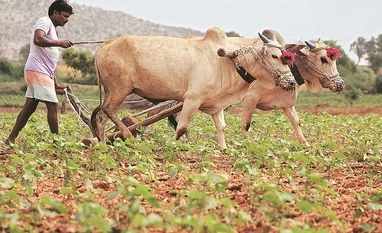
Water conservation: Nabard to help 1,00,000 villages before monsoon
Dilip Kumar Jha Mumbai
Last Updated : Jun 15 2017 | 1:29 AM IST
Farmers are shifting from oilseeds and pulses to more remunerative crops like cotton and maize this kharif season.
The area under oilseeds and pulses is likely to decline with prices ruling below minimum support prices in many mandis. 

Farmers are agitating because their produce is not being lifted by government agencies and traders are also not buying ahead of the GST.

Low sowing is likely to rebalance the demand-supply situation in 2017-18 (July-June). India is dependent on imports for 55 per cent of its edible oils (14 million tonnes) and 25 per cent (5.5 million tonnes) of its pulses. 

The area under cotton and maize might increase on better realisation. This will, however, pull down their prices in the next season.

Nationwide farmers’ unrest over the last two weeks has affected kharif sowing. In Maharashtra, the sown area is 1.1 per cent of the area covered a year ago. With forecasts of a normal monsoon, sowing is likely to intensify in the next few days. “Cotton and maize yielded better prices than soyabean, tur and groundnut last year. Farmers might shift to such remunerative crops,” said Aurobinda Prasad, vice-president, Kotak Commodity Services.

Prices of pulses and oilseeds have been under pressure due to record production. Farmers were also lured into planting more by the government through higher MSPs. Additionally, imports kept prices low.

Between October 2016 and May 2017, tur prices fell 45.71 per cent to trade at Rs 3,800 a quintal, 25 per cent lower than its MSP. Moong and urad prices also fell by 23 and 30 per cent, respectively, to Rs 4,600 a quintal and Rs 5,650 a quintal, substantially lower than their MSPs. Prices of soyabean and groundnut fell by 11 per cent and 17 per cent, respectively, to Rs 2,886 a quintal and Rs 3,725 a quintal.

Cotton prices reported a decline, but the fall was less steep than in oilseeds and pulses. The benchmark medium staple cotton price fell by 4.7 per cent to trade currently at Rs 11,477 a bale (170 kg). “Oilseed is a traditional crop in which substitution is low, but farmers growing pulses might migrate to other crops. Since soil conditions favour oilseeds, pulses farmers may shift to oilseeds,” said Madan Sabnavis, chief economist, CARE Ratings.

“There is a possibility that farmers may go slow in pulses and oilseeds unless the government increases import duties,” said Ritesh Kumar Sahu, analyst, Angel Commodity Broking.

One subscription. Two world-class reads.

Already subscribed? Log in

Subscribe to read the full story →
*Subscribe to Business Standard digital and get complimentary access to The New York Times

Smart Quarterly

₹900

3 Months

₹300/Month

SAVE 25%

Smart Essential

₹2,700

1 Year

₹225/Month

SAVE 46%
*Complimentary New York Times access for the 2nd year will be given after 12 months

Super Saver

₹3,900

2 Years

₹162/Month

Subscribe

Renews automatically, cancel anytime

Here’s what’s included in our digital subscription plans

Exclusive premium stories online

  • Over 30 premium stories daily, handpicked by our editors

Complimentary Access to The New York Times

  • News, Games, Cooking, Audio, Wirecutter & The Athletic

Business Standard Epaper

  • Digital replica of our daily newspaper — with options to read, save, and share

Curated Newsletters

  • Insights on markets, finance, politics, tech, and more delivered to your inbox

Market Analysis & Investment Insights

  • In-depth market analysis & insights with access to The Smart Investor

Archives

  • Repository of articles and publications dating back to 1997

Ad-free Reading

  • Uninterrupted reading experience with no advertisements

Seamless Access Across All Devices

  • Access Business Standard across devices — mobile, tablet, or PC, via web or app

Next Story



