Maha sugar barons seek Sharad Pawar's help to resolve tax issue
Sugar cooperatives have challenged I-T Dept's demand of Rs 4,500 cr in taxes in the Supreme Court
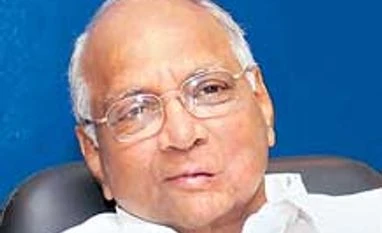
Sanjay Jog Mumbai The heads of Maharashtra’s cooperative sugar factories will on Wednesday meet former Union agriculture minister Sharad Pawar to discuss the crisis in the sector.
Cooperative sugar factories have sought the Centre provide a soft loan of Rs 700 a tonne to enable them to pay the fair and remunerative price (FRP) to cane growers.
They have also asked for an increase in the sugar import duty and the creation of a buffer stock of at least five million tonnes.
Though Union Finance Minister Arun Jaitley had said he would announce a package on January 21, this wasn’t the case. Of the 176 factories in Maharashtra, so far, only 26 have paid an FRP of Rs 2,200 a tonne to cane growers.
Cooperative sugar factories are concerned about claims of Rs 4,500 crore made by the Income Tax (I-T) Department for the period between 1992-93 and 2014-15.
A review petition filed by few such factories in 2012 is expected to be heard in the Supreme Court early next month. The I-T department says the difference between the higher rate offered by sugar factories and the FRP can be considered as their profit and, therefore, it is taxable.
At Wednesday’s meeting with Pawar, the heads of cooperative sugar factories are also expected to discuss how to pursue their case against the I-T department in the Supreme Court.
However, a managing director of a leading sugar cooperative factory told Business Standard, “The payment to cane growers was part of their price of raw material and, therefore, business expenditure. It is not distribution of profit, as argued by the I-T department.
Before the introduction of the FRP regime, the cane price in Maharashtra was fixed by a committee of ministers, chaired by the chief minister. It was always higher than the statutory minimum price. After the principal was fixed, the office of the commissioner of sugar issued a final cane price for each mill. Factories had to abide by it.”
He recalled the Bombay High Court and a special bench of the Income Tax Appellate Tribunal had decided in favour of the cooperative sugar sector and ruled as payments to cane growers was business expenditure, it couldn’t be taxed.

 "Maha sugar barons seek Sharad Pawar's help to resolve tax issue")

