Maintain derivatives records for at least 2 years, RBI asks banks

In case of commercial papers and bonds, there will be no grace period for repayment
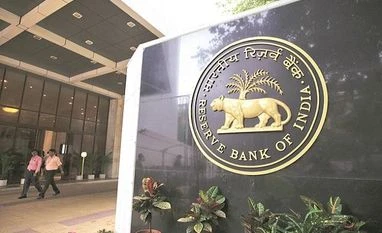
Maintain derivatives records for at least 2 years, RBI asks banks
RBI on Friday said it would announce draft guidelines for derivatives, including credit-default swaps, which a buyer buys as an insurance against default.
Anup Roy Mumbai
4 min read Last Updated : Dec 06 2020 | 11:56 PM IST
The Reserve Bank of India (RBI) has asked banks dealing in derivatives such as credit-default swaps to maintain their records for at least two years, and not to handle products that they, as market-makers, cannot price independently. 

All pricing and periodic valuations of derivatives have to be documented, and if an established model is used, its details have to be understood and documented.

In case something is non-observable or subjective, its use must be justified and calculations documented.

The seller of the product has to undertake due diligence about the buyer, and only products that are in sync with the customers’ objectives and risk appetite can be sold.

“A product shall be offered only to those users who have the necessary knowledge and experience to understand the nature and risks of the product; and who have the financial ability to bear these risks,” a draft guideline released by the RBI on derivatives said.

Besides, the user should have the business, financial operations, skills, sophistication, risk management framework, and internal policies consistent with the product being offered. This means that derivatives the customer doesn’t understand well cannot be sold. If they are, any loss would be the liability of the seller, said experts.

GUIDELINES

  • Derivatives can be only sold to those who understand and need the product 
  • Sellers will have to give detailed beak-up of product pricing
  • There will be no grace period for repayment of bonds
  • In case of default, issuers won’t be allowed to access markets for six months after settling their full payments 
  • In case of a default, the issuer has to mention it on their website


The central bank on Friday said it would announce draft guidelines for derivatives, including credit-default swaps, which a buyer buys as an insurance against default.

Similarly, the central bank issued draft guidelines for money-market instruments including certificates of deposits (CDs) and commercial papers (CPs). In its policy, the central bank has allowed regional rural banks to participate in the RBI’s daily liquidity adjustment facility.
The central bank made it clear there would be no grace period for repaying CPs and non-convertible debentures (NCDs, or corporate bonds). The issuer should make funds available for redemption available to the debenture trustees by 4 pm on the redemption date.

It said entities issuing Rs 1,000 crore or more in a year must get credit ratings.

“The issuer who has defaulted on the repayment of a coupon/redemption, partially or in full, of a CP and/or NCD shall not be allowed to access the respective market from the date of default (for) six months after the complete repayment of the defaulted obligation,” a draft guideline said.

For the following six months, the issuer will need to obtain ratings from at least two credit-rating agencies for any fresh issue, “irrespective of the amount of total issuance during the financial year, subject to otherwise meeting all conditions for issuing CPs/NCDs”.

“There will be no grace period for repayment of CPs/NCD,” the RBI specified. If there is a default, it should be communicated to the debenture trustee and rating agencies by 5.30 pm, and the information should be publicly disseminated and mentioned on the issuer’s website.

“The IPA (issuing and paying agent) shall ensure that partial repayments, if any, are distributed to investors in proportion to the investment made in the CPs or NCDs,” the draft guidelines said.

In its draft guidelines, the RBI said CDs and CPs should be issued in minimum denominations of Rs 5 lakh and its multiples. The tenor will be at least seven days and should not exceed a year.

While CPs are to be issued at a discount to the face value, NCDs should be used with fixed or floating rate coupons.

One subscription. Two world-class reads.

Already subscribed? Log in

Subscribe to read the full story →
*Subscribe to Business Standard digital and get complimentary access to The New York Times

Smart Quarterly

₹900

3 Months

₹300/Month

SAVE 25%

Smart Essential

₹2,700

1 Year

₹225/Month

SAVE 46%
*Complimentary New York Times access for the 2nd year will be given after 12 months

Super Saver

₹3,900

2 Years

₹162/Month

Subscribe

Renews automatically, cancel anytime

Here’s what’s included in our digital subscription plans

Exclusive premium stories online

  • Over 30 premium stories daily, handpicked by our editors

Complimentary Access to The New York Times

  • News, Games, Cooking, Audio, Wirecutter & The Athletic

Business Standard Epaper

  • Digital replica of our daily newspaper — with options to read, save, and share

Curated Newsletters

  • Insights on markets, finance, politics, tech, and more delivered to your inbox

Market Analysis & Investment Insights

  • In-depth market analysis & insights with access to The Smart Investor

Archives

  • Repository of articles and publications dating back to 1997

Ad-free Reading

  • Uninterrupted reading experience with no advertisements

Seamless Access Across All Devices

  • Access Business Standard across devices — mobile, tablet, or PC, via web or app

Topics :Reserve Bank of IndiaBanking sectorDerivativesCommercial paper market

Next Story



