Modi for Opec-like union in solar space
National Institute of Solar Energy to be headquarter for International Solar Alliance
BS Reporter New Delhi Prime Minister Narendra Modi along with French President François Hollande announced India as the headquarter for the International Solar Alliance (ISA).
The Alliance announced during Climate Change Summit in Paris last year is partnership of solar resource-rich countries. Currently, there are 121 countries from Africa, South-east Asia and Europe which have agreed to be members of ISA.
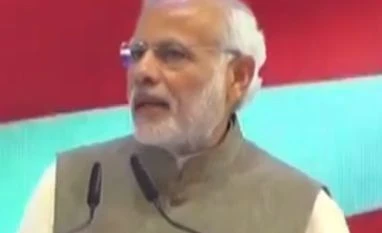
"If European countries can form one union and if oil producing countries can come together, then why can't solar rich countries forge a partnership. We have come together for the betterment of the humanity, society, environment and energy concerns, said Prime Minister Modi during foundation laying ceremony of the interim headquarters of ISA.
The headquarters would be based out of National Institute of Solar Energy (NISE) in Gurgaon, Haryana.
Hollande said that the country would invest its technology and pursue its companies for investment.
"France will invest £300 million for the International Solar Alliance and our companies will contribute through technological improvement and R&D," said Hollande.
Among the Indian agencies, Indian Renewable Energy Development Agency (IREDA) and Solar Energy Corporation of India (SECI) would put $2 million in corpus for ISA.
IREDA is financing agency for renewable power projects and SECI is dedicated subsidiary of ministry of new and renewable energy for executing solar power projects.
Modi also said new innovation and research is required to meet climate change commitments.
Minister of state for coal, power and renewable energy Piyush Goyal said India has embarked on the world's largest renewable energy targets.
India aims to install 1,75,000 Mw of renewable based power projects by 2022, out of which 100,000 Mw is solar.
As a part of its Climate Change commitments, India committed close to 40 per cent of its energy to come from renewable energy sources by 2022.
The underlying rationale for ISA is to “ensure access to affordable, reliable, sustainable and modern energy for all”, said the ISA working draft.
It also plans to increase the share of renewable energy in the global energy substantially by 2030.
The Government of India will support ISA by hosting its Secretariat for an initial period of five years and thereafter it is expected to generate its own resources and become self-financing.

 "Modi for Opec-like union in solar space")


 Connect with us on WhatsApp