Prime Minister (PM) Narendra Modi on Friday indicated that he was unlikely to beat a retreat on his government’s move to demonetise Rs 1,000 and Rs 500 notes, even if it meant the Opposition uniting against him and the winter session being washed out.
At a morning event to mark the Constitution Day, Modi said people have criticised demonetisation on the pretext the government did not make ample preparations. “I think the pain of such people is that the government did not give a chance (to them) to make any preparation,” he said. The PM said these same people would have lavished praise on him if they had got 72 hours to make their preparations.
On Thursday, former PM Manmohan Singh had in the Rajya Sabha slammed the Modi government’s move as “a case of organised loot and legalised plunder” and that it was a “monumental management failure.”
Modi’s comments provoked Opposition protests when the two Houses of Parliament convened at 11 am, and had to be adjourned for the day without transacting any business. A united Opposition demanded the PM apologise for his remarks, which have insulted the institution.
Friday’s developments are set to make it difficult for the Opposition and the ruling alliance to reach a truce for Parliament to run smoothly. Proceedings are set to be disrupted on Monday as the Opposition has planned protests across the country against demonetisation.
It is also unlikely that the Opposition would allow the government to introduce the amendments that the Cabinet had proposed in the Income Tax Act on Thursday, to specify penalties on those with black money. This, said sources, could yet again give the government an opportunity to blame the Opposition for blocking an anti-black money move of the PM. The amendments to the Income Tax Act, however, would be a “money Bill”, and the government, with a majority in the Lok Sabha, can ensure its passage.
Later in the day, speaking at the foundation laying ceremony of the All India Institute of Medical Sciences, the PM said demonetisation would help end the exploitation of the poor and the middle classes.
Opposition leaders slammed Modi. Congress Vice-President Rahul Gandhi said the PM had “laughed”, when he was in Japan, at the misery of people because of his note ban.
“Let's see what emotions appear on his face when he comes to the Lok Sabha," Rahul said as he dared the Prime Minister to take part in a debate in Parliament.
Communist Party of India (Marxist) Chief Sitaram Yechury said the PM was a “Tughlaq” who had gone missing after issuing a firman, or order. The reference was to a medieval Indian ruler, Muhammad bin Tughlaq, who had experimented with a disastrous currency change.

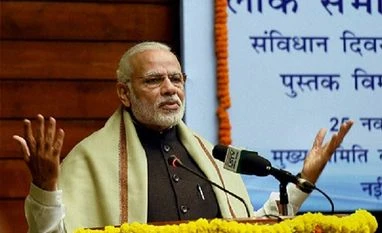 "Narendra Modi attacks Opposition for criticising note ban")


 Connect with us on WhatsApp