The government surveys on expenditure will now gauge the spending habits of Indian consumers on e-commerce, apart from offline purchases. However, the moot question is whether the surveys would show any drastic change in consumer behaviour apart from the mode of such spends.
For instance, the average urban Indian spent 42.6 per cent of household consumption on food in 2011-12, according to the previous survey, compared with 53 per cent spent by a villager. Roughly, an average of these two percentages is taken to arrive at the constitution of food and related items in the consumer price index (CPI).
Whether the 2017-18 survey, work for which starts next month for a year by the National Sample Survey Organisation (NSSO), would reveal any drastic change in this consumption pattern would be an interesting take to get.
This would also reveal whether the income of the average Indian, for instance in urban areas, is increasing relative to inflation or not. Generally, consumption pattern shows that expenditure on the food items decline in proportion to total spend as one's income increases. This can also be gauged from the fact given in the expenditure behaviour of urban and rural people on food items above.
Besides, expenditure on food items itself goes for a change in terms of items of consumption. Within food items, an average villager used to spend close to 11 per cent of total monthly expenditure on cereals and its substitutes. This percentage stood at close to 7 per cent for urban people on an average that year.
Now, this proportion should decline in the 2017-18 survey, if income of the people adjusted to inflation is increasing. More percentage of monthly household consumption ideally go to protein-based items within the food category, if people are becoming more prosperous. This would also give an idea whether economic growth is job-less, as alleged by certain quarters.
In 2011-12, protein-based items such as pulses and their products accounted for close to three per cent in case of rural monthly consumption expenditure per household and two per cent in case of urban fellows.
Non-vegetarian items constituted close to five per cent of monthly household consumption expenditure in case of rural fellows and close to 4 per cent in case of urbanites in 2011-12.
Then, there is all the important category of education. In 2011-12, 3.5 per cent of average monthly household consumption expenditure went to education in rural areas and close to 7 per cent in urban areas. This should ideally increase in 2017-18 survey if a theory of increasing income holds true.

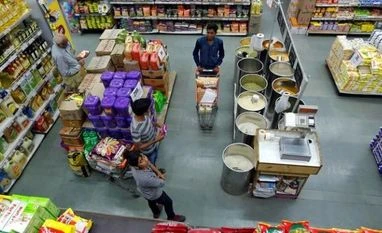 "New govt surveys will track your online buying behaviour too")












 Connect with us on WhatsApp