3 min read Last Updated : Mar 21 2023 | 8:18 PM IST
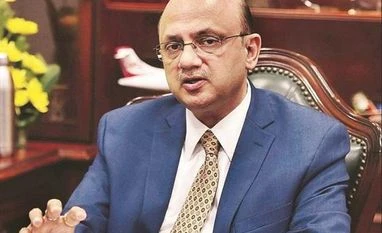
The government has no plans “as of now” to accord additional bilateral rights to West Asian carriers, Civil Aviation Secretary Rajiv Bansal said on Tuesday.
To assist an airline from one country to operate international flights to another, both sides must negotiate and sign a “bilateral air services agreement”. This agreement sets the number of flights or seats that are permitted to operate per week between the two countries.
Emirates and Jazeera Airways, along with other West Asian carriers, have requested increased bilateral rights from the government to expand their flight operations.
However, Indian carriers are opposed to the expansion of these air services agreements because a large number of passengers travelling from India to North America and Europe currently use Gulf carriers. Indian carriers like Air India are currently acquiring more wide-body planes to operate direct flights to these two continents.
On the sidelines of the CAPA India Aviation Summit 2023, Bansal told reporters: “We have an open-sky policy with all countries beyond 5,000 kilometres. We are seeing a new hub coming up in Vietnam. Vietnam and Indonesia are asking for more frequencies. This is reflective of Indian travel demand. Russia wanted an increase and we allowed it.”
All West Asian carriers have been asking for additional seats for several years, but India hasn’t acquiesced, he added.
When asked if the government’s stance on bilateral rights to West Asian carriers remains unchanged, he replied: “As of now, yes.”
India is a major market for West Asian carriers. For instance, Emirates operates about 3,305 flights per week in total, and about 11 per cent of them are between India and Dubai, according to aviation analytics firm Cirium.
Likewise, Etihad Airways operates 1,035 flights per week in total, and about 15 per cent of them are between New Delhi and Abu Dhabi.
Meanwhile, American carriers are in a quandary: they are unable to fly through Russian airspace because of the Ukraine conflict. They claim this is precipitating business losses to foreign competitors like Air India, which can offer faster and cheaper travel options between the US and Asia. As a result, US airlines are increasing their lobbying efforts on Capitol Hill and at the White House to restrict these competitors.
On this, Bansal said: “I have read about it in the newspapers. We have not received anything on this from the US. Air routes are covered by the International Civil Aviation Organization, which was set up after the Chicago Convention. If countries start telling (each other) who can fly where and who cannot, the entire civil aviation order will break. It is too premature at this stage. This is a news report about Senators lobbying in the US.”