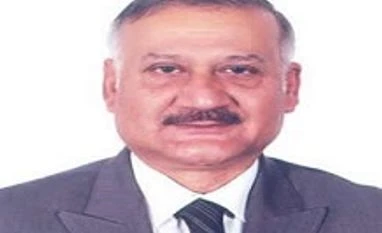
“Something is indeed seriously wrong,” Director of Central Bureau of Investigation (CBI) Anil Sinha said on Wednesday, as he underlined the increase in non-performing assets (NPAs) of banks from Rs 44,957 crore in 2009 to Rs 3 lakh crore in 2015, with bad loans almost doubling from 2 per cent of total advances to 4.36 per cent during the period.
Speaking at the seventh conference of CBI and Indian Banks' Association, Sinha said, “During the last six years, gross NPAs in public sector banks (PSBs) have gone up from Rs 44,957 crore in 2009 to Rs 3 lakh crore in 2015. The level of gross NPAs as percentage of gross advances has also gone up from 2 per cent in 2009 to 4.36 per cent in 2015. And we are not even considering huge amounts tied up in accounts under restructuring.” “While I fully understand that loan defaults can happen due to business risk and reasons beyond control of banks, borrowers and regulators, yet a significant part of the defaults are wilful and fraudulent. What causes greater concern is that a major part of the NPAs and frauds are in large value accounts,” he said.
Citing the cases of Kingfisher and Pearls Group, the agency chief lambasted the banks as well as regulatory bodies for approaching it very late with their complaints.
“CBI has recently registered a case of cheating and fraud against Kingfisher and its erstwhile management involving allegations of defrauding banks to the tune of nearly Rs 7,000 crore. This case was registered in July 2015, but the loans/advances were taken during 2004 to 2012. Despite our repeated requests, the banks did not file a complaint with CBI. We had to register the case on our own initiative,” he said.
The CBI chief said there is a growing sense of anguish among the public that while banks are strict on retail borrowers, the big borrowers and large scale fraudsters are able to not only evade the law but enjoy the fruits of crime.
There is also a rising trend in case of bank frauds and financial crimes taken up by the CBI, as it investigated 171 such cases involving funds of Rs 20,646 crore in 2015, he said.
In addition, the CBI is also investigating Ponzi scheme cases involving funds of over Rs 1,20,000 crore, he said.
Additionally, there is the unduly slow and long process by which such loans and advances are first red flagged, declared NPAs, then wilful defaulters and finally fraudulent. This whole process is so time consuming that it allows such large borrowers ample time to walk away with the funds, he said.
Sinha said a large part of such funds moves outside the country to tax havens through hawala and other unofficial channels.
"As a result of these limitations, investigations by CBI are grossly hampered. The accountability mechanisms in banks and financial institutions are weak and diffused. In the end, no one seems accountable. The message to the public is that rich and powerful are able to avoid consequences of cheating and fraud, while the ordinary citizens are promptly booked.
This undermines people's faith in justice which has dangerous consequences in a democracy," Sinha said.
The delay in reporting such a fraud jeopardised the cause of justice and gave the offenders the opportunity to divert funds and destroy evidence.
On PACL, Sinha said the Supreme Court had to order investigations and later also order the return of money to the depositors under its supervision. The regulator should have take suo moto cognisance to protect the rights of the depositors, he noted.
"The legislative and regulatory gaps in states and at the Centre are allowing ponzi schemes to prosper and cheat millions needs our attention too. Such schemes are exploiting the absence of banking in remote areas of the country and targeting the lowest economic group of the society. The poor, particularly women, are a major target of ponzi schemes," Sinha said.

 "Non-performing assets of PSBs at Rs 3 lakh crore: CBI chief Anil Sinha")


