One year of GST: After teething troubles, GSTN has stabilised, says Pandey

We are working on the final version of the simplified form... It will simplify the life of taxpayers, says GSTN chairman Ajay Bhushan Pandey
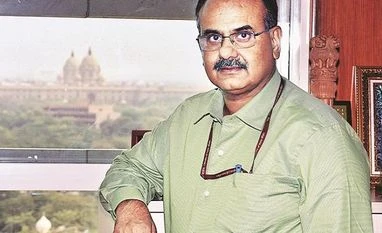
ajay bhushan pandey, gstn chairman
GSTN chairman Ajay Bhushan Pandey
Dilasha SethKiran RatheeIndivjal Dhasmana
Last Updated : Jul 04 2018 | 6:37 PM IST
Ajay Bhushan Pandey, chairman of GSTN, tells Dilasha Seth, Kiran Rathi and Indivjal Dhasmana how the IT backbone has transformed itself over the last one year. Edited excerpts:

The GSTN portal crashed a couple of times because of which the deadline for filing returns had to be extended. The system also crashed in February when the e-way bill was to be introduced. What is the situation now?

We should see what was the situation before (the introduction of) GST. We have 35 states and Union Territories. Each state had its own VAT system, distinct return forms and two central tax systems — excise duty and service tax. All of them were merged into one tax and one IT system. For instance, if a person was registered with the Maharashtra VAT (department), he would be separately registered with the excise department and with the service tax department. If he had some activities in another state, then again he had to register with the VAT department of that state. The total number of taxpayers involved was 8-9 million. Such a huge system integrated into one required some time to settle in. People were not used to filing returns in the new system. There were some teething issues — some technical difficulties or bugs — for which we made corrections. Both sides tried to adjust in the first few months. We analysed those very patiently. The net result is that the system has stabilised now.


Are you sure that the system has stabilised?

Around 7 million returns are being filed every month. As many 10.14 million taxpayers are registered on the GSTN system. As many as 3.57 billion invoices have been uploaded on our system. This means people, by and large, are getting across to the system. Some people might still have some difficulties in doing a particular type of transaction. We are trying to address those things. 

What sort of feedback are you getting from GST Suvidha Providers now, as against six months back?

The number of complaints we receive from our call centres has come down significantly. Sometimes people say they have mistakenly put an extra zero in their transaction (figure while filing the return). So, they want to correct that. We try and guide them. But, any amendment has to be taken very carefully. Any change that we allow people to make has to go through scrutiny.


You headed a committee to suggest simple return, which will come into effect this calendar year. Will the proposed return make life simpler for the assessees?

It will simplify the life of taxpayers. In the earlier design, there were three returns every month, and then GSTR-3B was also designed. So it boiled down to four returns every month. Besides, each return was dependent on somebody else filing the returns. Unless the other person files the return, this person is stuck and because of him, others in the chain are stuck. So, it was a deadlock kind of a situation. We wanted to remove that. We are working on the final version of the simplified form. There will be a single return. 

Will it be a single-page return?

We are trying to make it contextual. Suppose you are not an exporter, then that part of the return will not be displayed to you. At the beginning of the return filing, the assessee will be asked a few questions. On the basis of his answers, only the relevant portions would be displayed to him.


In the second stage of the return simplification, the buyer will get provisional credit even if the seller does not upload the invoices. Will it not lead to dispute later?

This is only for a transition. It will be for providing convenience. 

In the ultimate phase, if the seller defaults or is untraceable, the buyer will be caught and asked to pay taxes. Is it not biased against the buyer?

That is part of the GST law. This is not a new provision. The law currently is that one is entitled to take input tax credit only if the taxes have been paid by the seller. That is the position of law.

One subscription. Two world-class reads.

Already subscribed? Log in

Subscribe to read the full story →
*Subscribe to Business Standard digital and get complimentary access to The New York Times

Smart Quarterly

₹900

3 Months

₹300/Month

SAVE 25%

Smart Essential

₹2,700

1 Year

₹225/Month

SAVE 46%
*Complimentary New York Times access for the 2nd year will be given after 12 months

Super Saver

₹3,900

2 Years

₹162/Month

Subscribe

Renews automatically, cancel anytime

Here’s what’s included in our digital subscription plans

Exclusive premium stories online

  • Over 30 premium stories daily, handpicked by our editors

Complimentary Access to The New York Times

  • News, Games, Cooking, Audio, Wirecutter & The Athletic

Business Standard Epaper

  • Digital replica of our daily newspaper — with options to read, save, and share

Curated Newsletters

  • Insights on markets, finance, politics, tech, and more delivered to your inbox

Market Analysis & Investment Insights

  • In-depth market analysis & insights with access to The Smart Investor

Archives

  • Repository of articles and publications dating back to 1997

Ad-free Reading

  • Uninterrupted reading experience with no advertisements

Seamless Access Across All Devices

  • Access Business Standard across devices — mobile, tablet, or PC, via web or app

Next Story


