
PM nixes single rate under GST; says Mercedes, milk cannot have same tax
PM said GST was a massive change, requiring a complete reset of one of the world's largest economic systems
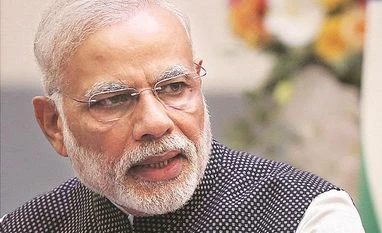 "PM nixes single rate under GST; says Mercedes, milk cannot have same tax")
WebinarsNew
Deep DiveNew
Explore Business Standard
PM said GST was a massive change, requiring a complete reset of one of the world's largest economic systems
Prime Minister Narendra Modi on Sunday ruled out a single tax rate under the GST, saying Mercedes car and milk cannot be taxed at the same rate and accepting Congress party' demand for a uniform 18 per cent rate would lead to a spike in food and essential items' taxation.
Modi said the Goods and Services Tax (GST) has within one year of its launch led to over 70 per cent jump in indirect taxpayer base, demolished check-posts and merged 17 taxes and 23 cesses into one single tax.
The new tax regime, which subsumed central levies like excise duty and service tax and state taxes like VAT, is aimed at making indirect taxation "simple" while eliminating the Inspector Raj, he said, adding the GST is an evolving system which is calibrated based on feedback from state governments, trades and other stakeholders.
"It would have been very simple to have just one slab but it would have meant we could not have food items at zero per cent tax rate. Can we have milk and Mercedes at the same rate?
"So, when our friends in Congress say that they will have just one GST rate, they are effectively saying they will tax food items and commodities, which are currently at zero or 5 per cent, at 18 per cent," he said in an interview to 'Swarajya' magazine.
Modi, according to a part-transcript of the 45-minute interview posted by Swarajya on its website, said against a total of 6.6 million indirect taxpayers registered since independence, 4.8 million new enterprises have registered since the launch of the GST on July 1, 2017.
"Around 3.5 billion invoices were processed and 110 million returns were filed. Would we be looking at such numbers, if GST were indeed very complex?" he asked. "Check-posts across the country have been abolished and there are no more queues at state borders. Not only are truck drivers saving precious time but also the logistics sector is getting a boost and thereby increasing the productivity of our country. Would this be happening if GST was complex?"
To a query on criticism of GST implementation, he said the new tax regime was a massive change, requiring a complete reset of one of the world's largest economic systems.
"The reform merged 17 taxes, 23 cesses into one single tax. When it was finally introduced, it was our endeavour to make it simple and ensure sensitivity of the system. There are often teething troubles seen when a reform of this magnitude is carried out, but these issues were not only identified but also addressed in real time," he said.
The GST, he said, has seen Indian cooperative federalism at its best. "We consolidated the states and developed proactively a consensus, where earlier governments had failed."
The Prime Minister said earlier many taxes were hidden and under the GST, "what you see is what you pay."
First Published: Jul 01 2018 | 3:14 PM IST


 Connect with us on WhatsApp