A sharp rise in the Reserve Bank of India’s (RBI’s) provision figures for the financial year 2016-17 has elicited keen interest from analysts.
The central bank revealed on Wednesday that it had done a provision of Rs 13,140 crore for FY17, against Rs 1,000 crore the previous year. Of this provision, Rs 6,585 crore was charged to the contingency fund on account of notional losses on forward contracts (Rs 2,963 crore) and for the Investment Revaluation Account-Foreign Securities (Rs 3,622 crore). However, for the balance Rs 6,555 crore, the central bank has given no explanation.
The first two charges can be explained as following: In order to redeem the foreign currency non-resident bonds worth about $27 billion, the RBI built up a formidable forward position since November 2013 (when the FCNR deposits were accepted) and kept on rolling the contracts, which still continues to a large extent. The rolling of contracts, even at the face of fluctuating exchange rates, must have caused a large notional loss to the central bank. The second amount is directly linked to RBI’s foreign securities, such as US treasury bills, where yields rose in the past one year, leading to a revaluation loss as prices of fixed assets fall when yields rise. For the third component, there are a number of theories put forward by analysts.
According to a senior economist with a local brokerage firm, the reason for this charge could be that the central bank is expecting a large valuation disruption in some of its assets against which it should fortify its balance sheet. Or, he said, it was the extent of scrapped Rs 500 and Rs 1,000 notes that the central bank expected to remain unreturned for quite some time, but are perfectly accounted for. For example, this amount could be reflecting the balance with other countries such as Nepal and Bhutan.
According to RBI’s annual report, the unreturned Rs 1,000 notes alone were to the tune of Rs 8,900 crore, much higher than the excess provision that the central bank made on undisclosed grounds. But it is possible that the central bank will have to extinguish the liability of a large chunk of this amount in the coming years.
Demonetisation also led to a heavy loss to the central bank that had to give interest to banks against excess money deposited. The impact of this amount, net of repo where the central bank lends money to banks and earn interest, was Rs 17,430 crore. Overall, the interest income of the central bank fell to Rs 66,051 crore in FY17, from Rs 73,543 crore a year ago, while the total assets increased only 1.9 per cent to Rs 33.04 lakh crore. The average yield on RBI assets, therefore, stands at less than 2 per cent for the financial year 2016-17 against about 2.3 per cent in 2015-16.
“The central bank needs to put its money in better yielding assets,” said an economist, adding that if total income to total assets ratio was considered, the fall in returns was even more sharper.
The analyst said the fall in income yield was understandable because of demonetisation, but the need for deploying funds in better yielding assets was an urgent need as the central bank was already losing its seigniorage income, which is roughly the interest payment received by the central bank on the total amount of currency issued. Since the currency in circulation is shrinking for the central bank, analysts say RBI’s seigniorage income is also falling. The notes in circulation were at 17.97 lakh crore before demonetisation. At the end of June, the notes in circulation stood at Rs 15.1 at the end of June.

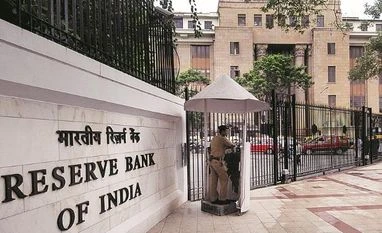 "RBI annual report: Provision figure confounds analysts")












 Connect with us on WhatsApp