To close gaps, Centre will soon introduce revised crop insurance rules

No major change but Centre aims to 'close the gaps'; some incentives and penalties to be introduced
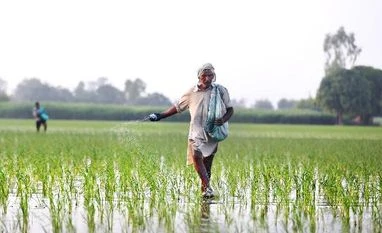
farmer, msp, agriculture
To appease farmers ahead of 2019 parliamentary elections the Cabinet Committee on Economic Affairs (CCEA), chaired by Prime Minister Narendra Modi, last week raised MSP by 4-53% across all agri-commodities for kharif in 2018
Advait Rao Palepu Mumbai
Last Updated : Jul 22 2018 | 7:00 AM IST
The Union government will published revised guidelines for the Pradhan Mantri Fasal Bima Yojana (PMFBY) in the next 10-15 days.
 
These will correct specific gaps in the existing ones, said Ashish Kumar Bhutani, additional secretary at the ministry of agriculture, to journalists on Friday. 
 
“There will not be any dramatic differences from the existing guidelines. Basically, it will provide more details on some procedures to make it more understandable, to ensure uniformity in implementation of the scheme,” he said. 

PMFBY was launched in March 2016 and around 48.5 million farmers were enrolled for the insurance cover, as of last month. This is a 15 per cent decline in the number at the end of 2015-16.

In the 2017 kharif season, total admissible claims were nearly Rs 136.6 billion, as against Rs 100.6 bn during the 2016 one, an increase of 36 per cent. 

The new guidelines will have incentives and disincentives for state governments, to improve their compliance with the timelines laid down for data collection and sharing, among other aspects of the scheme.

“The guidelines surrounding seasonality of data have been rationalised and timelines have been rationalised,” Bhutani said. 
For example, the central government will cut its share of the subsidy under the scheme by five per cent if a state breaches on specific procedures.
 
Further, the government will introduce two new features for insuring farmers against localised calamities. The first is for cloudburst and the second for fire. 
 
“For the first time we will be introducing district-wise crop guarantees. So far, these have been for an entire state. For, within states, there could be differences in the sowing period between districts,” explained Bhutani. 

Further, as an experiment, the government plans to extend coverage to wild animal depredation. 


Under the scheme, crop cutting experiments (CCEs) have to be conducted by state governments at the time of harvest to help assess the yield loss, to inform insurers of probable claim payouts. The latter have said these are not conducted properly in several states. And, in some instances, that data has been falsified. 
 
However, the main issue with the CCEs, insurers say, is that the data collected is shared with a large time lag. Around a million CCEs have to be conducted every season to best assess the probable harvest (yield) loss. 

“We have introduced a technologically driven scheme, using archaic methodologies. It would take another two years for us to bring in robust technology for computing the yield of crops across the country, every season,” Bhutani said. 

Differences between states in their ability to provide timely and proper data depend on the level of technology adoption, he added. In Karnataka and Gujarat, for example, there has been good adoption of technology across the administration. In contrast, the experience of PMFBY in Bihar is poor, with technology adoption lagging other regions. 

At the conference here on agri-insurance, Bhutani urged insurers for more resources to improve the awareness of PMFBY among farmers. And, to work closer with states to resolve disputes, instead of asking for central intervention.. 
The government will leverage the postal service, he said, for more of awareness and enrolment. 
 
The PMFBY portal will soon have an automatic claim calculation, to improve transparency between stakeholders. 
As of now, a total of Rs 190 billion worth of premium revenue had been collected by insurance companies in the kharif 2017 season. Around Rs  110 bn (claims) has been disbursed and in the next week, around 90 per cent of the claims will be paid, barring states where the (state) subsidy has not been released, Bhutani said. 

Around Rs 50 bn worth of claims are yet to be paid. Bihar and Telangana, for instance, are yet to release their share of the subsidy. 
 
Bhutani said the Centre would spend Rs  150 bn on the scheme this year.

One subscription. Two world-class reads.

Already subscribed? Log in

Subscribe to read the full story →
*Subscribe to Business Standard digital and get complimentary access to The New York Times

Smart Quarterly

₹900

3 Months

₹300/Month

SAVE 25%

Smart Essential

₹2,700

1 Year

₹225/Month

SAVE 46%
*Complimentary New York Times access for the 2nd year will be given after 12 months

Super Saver

₹3,900

2 Years

₹162/Month

Subscribe

Renews automatically, cancel anytime

Here’s what’s included in our digital subscription plans

Exclusive premium stories online

  • Over 30 premium stories daily, handpicked by our editors

Complimentary Access to The New York Times

  • News, Games, Cooking, Audio, Wirecutter & The Athletic

Business Standard Epaper

  • Digital replica of our daily newspaper — with options to read, save, and share

Curated Newsletters

  • Insights on markets, finance, politics, tech, and more delivered to your inbox

Market Analysis & Investment Insights

  • In-depth market analysis & insights with access to The Smart Investor

Archives

  • Repository of articles and publications dating back to 1997

Ad-free Reading

  • Uninterrupted reading experience with no advertisements

Seamless Access Across All Devices

  • Access Business Standard across devices — mobile, tablet, or PC, via web or app

Next Story



