Richard Thaler of US wins 2017 Nobel Economics Prize: All you need to know

He won the prize for his pioneering work to bridge the gap between economics and psychology
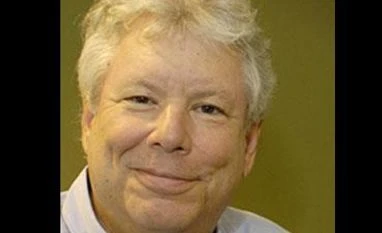
Richard Thaler of US wins 2017 Nobel Economics Prize
Agencies
Last Updated : Oct 09 2017 | 4:37 PM IST
US economist Richard Thaler won the 2017 Nobel Economics Prize for his contributions in the field of behavioural economics, the Royal Swedish Academy of Sciences said on Monday.

"In total, Richard Thaler's contributions have built a bridge between the economic and psychological analyses of individual decision-making," the award-giving body said on announcing the 9 million Swedish crown ($1.1 million) prize.

"His empirical findings and theoretical insights have been instrumental in creating the new and rapidly expanding field of behavioural economics, which has had a profound impact on many areas of economic research and policy."

"By exploring the consequences of limited rationality, social preferences, and lack of self-control, he has shown how these human traits systematically affect individual decisions as well as market outcomes," the Nobel jury said in a statement.

The economics prize, officially called the Sveriges Riksbank Prize in Economic Sciences in Memory of Alfred Nobel, was established in 1968. It was not part of the original group of awards set out in dynamite tycoon Nobel's 1895 will.

Who is Richard Thaler

Thaler is a member of the American Academy of Arts and Sciences, a Fellow of the American Finance Association and the Econometrics Society, and in 2015 served as the President of the American Economic Association.

Before joining the University of Chicago faculty in 1995 Thaler taught at the University of Rochester and Cornell as well as visiting stints at The University of British Columbia, the Sloan School of Management at MIT, the Russell Sage Foundation and the Center for Advanced Study in Behavioral Sciences at Stanford.

Originally from New Jersey, Thaler attended Case Western Reserve University where he received a bachelor's degree in 1967. Soon after, he attended the University of Rochester where he received a master's degree in 1970 and a PhD in 1974. He joined the Chicago Booth faculty in 1995.

One subscription. Two world-class reads.

Already subscribed? Log in

Subscribe to read the full story →
*Subscribe to Business Standard digital and get complimentary access to The New York Times

Smart Quarterly

₹900

3 Months

₹300/Month

SAVE 25%

Smart Essential

₹2,700

1 Year

₹225/Month

SAVE 46%
*Complimentary New York Times access for the 2nd year will be given after 12 months

Super Saver

₹3,900

2 Years

₹162/Month

Subscribe

Renews automatically, cancel anytime

Here’s what’s included in our digital subscription plans

Exclusive premium stories online

  • Over 30 premium stories daily, handpicked by our editors

Complimentary Access to The New York Times

  • News, Games, Cooking, Audio, Wirecutter & The Athletic

Business Standard Epaper

  • Digital replica of our daily newspaper — with options to read, save, and share

Curated Newsletters

  • Insights on markets, finance, politics, tech, and more delivered to your inbox

Market Analysis & Investment Insights

  • In-depth market analysis & insights with access to The Smart Investor

Archives

  • Repository of articles and publications dating back to 1997

Ad-free Reading

  • Uninterrupted reading experience with no advertisements

Seamless Access Across All Devices

  • Access Business Standard across devices — mobile, tablet, or PC, via web or app

Next Story



