Saudi discount to only partially transmit in product prices: IOC chief

According to Sanjiv Singh, chairman of Indian Oil Corporation, each rupee depreciation results in Rs 2,500 crore of more outgo on crude oil import
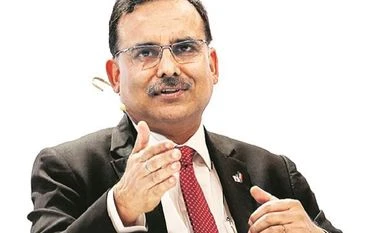
Sanjiv Singh, IOC chairman
“After the recent Saudi Arabia and Russia talks, they (Saudi Arabia) have reduced the OSP for Asia, not just for China, so India will benefit." - Sanjiv Singh, IOC chairman
Shine JacobJyoti Mukul New Delhi
4 min read Last Updated : Mar 11 2020 | 11:30 PM IST
India is likely to gain $5-6 a barrel in oil import after Saudi Arabia offered a discount on its official selling price (OSP) for Asia. 

However, a substantial portion of this will be neutralised by the fall in rupee value and government taxes on petroleum products. The crude oil impact on prices of petrol and diesel would be 40-50 per cent of the total price. The Indian crude oil basket fell to $34.52 a barrel after the fall in global prices, more than half the $71 it averaged in April 2019. The rupee's value has, however, depreciated. A dollar is now Rs 73.95, from Rs 69.89 last year.

According to Sanjiv Singh, chairman of Indian Oil Corporation, each rupee depreciation results in Rs 2,500 crore of more outgo on crude oil import. ”It is immaterial if we convert (the Saudi discount) into the retail price but the cut in price could be 55-60 paise a litre.”

Singh said IOC would incur significant inventory loss with the price fall.  “It will also affect our quarterly and yearly results. It is a concern because it impacts our balance sheet.” The impact cannot be neutralised in subsequent quarters, since it is coming in the financial year's final quarter, ending March 2020. 

“After the recent Saudi Arabia and Russia talks, they (Saudi Arabia) have reduced the OSP for Asia. Depending upon the crude, it will be $5-6 a barrel from April. Besides, other countries from which we import use Saudi OSP as their benchmark,” Singh told Business Standard. 

Saudi Arabia declares the official selling price for three regions – Asia, Europe and America every month, on the fifth. This is based on the grade of oil; there are markers, based on which a discount or premium is given. For Asia, the marker is Dubai-Oman. For Europe, it would be Brent; for the US. it would be ASCI.  According to official figures, India imported 21 million tonnes in the first half of this finaical year (April-September 2019). Each one rupee depreciation results in a 55-56p increase in product price, everything else remaining the same. About Rs 2.5 a litre of price increase last year was only because of exchange rate movements. Singh says his company is, however, hedged; its products are also benchmarked in dollars.

The three large producers — Saudi Arabia, Russia and the United States — have their own drivers and strategy, he said. However, current market dynamics go beyond the demand-supply situation. 

“There is also a shrinking demand for products in the global market. Probably, after a long time, we are seeing that product demand in the true sense is driving crude prices.” If crude is moving separately and products are driven by demand and supply, the crack (differential between product and crude price) is healthy. “If you remember 2014-15, when crude fell, we still had decent cracks. This time, when crude was sliding, the cracks were also extremely poor.” Singh said India benefited from lower prices because the working capital requirement of oil companies goes down and the internal energy cost for refiners also goes down --  nine per cent of the crude is used for refinery requirements. “However, such a huge slide in a single quarter, and clubbed with low cracks, is extremely challenging for oil companies. We will have massive inventory losses.” 
 
If cracks are healthy, and crude prices move up or down, the OMCs are naturally hedged, as product prices are also based on international prices. “Higher the crude price, my working capital requirement goes up, my interest rate burden also goes up by that extent and we have inventory gain in the balance sheet. The reverse happens when prices are going down.”

One subscription. Two world-class reads.

Already subscribed? Log in

Subscribe to read the full story →
*Subscribe to Business Standard digital and get complimentary access to The New York Times

Smart Quarterly

₹900

3 Months

₹300/Month

SAVE 25%

Smart Essential

₹2,700

1 Year

₹225/Month

SAVE 46%
*Complimentary New York Times access for the 2nd year will be given after 12 months

Super Saver

₹3,900

2 Years

₹162/Month

Subscribe

Renews automatically, cancel anytime

Here’s what’s included in our digital subscription plans

Exclusive premium stories online

  • Over 30 premium stories daily, handpicked by our editors

Complimentary Access to The New York Times

  • News, Games, Cooking, Audio, Wirecutter & The Athletic

Business Standard Epaper

  • Digital replica of our daily newspaper — with options to read, save, and share

Curated Newsletters

  • Insights on markets, finance, politics, tech, and more delivered to your inbox

Market Analysis & Investment Insights

  • In-depth market analysis & insights with access to The Smart Investor

Archives

  • Repository of articles and publications dating back to 1997

Ad-free Reading

  • Uninterrupted reading experience with no advertisements

Seamless Access Across All Devices

  • Access Business Standard across devices — mobile, tablet, or PC, via web or app

Topics :Saudi ArabiaSanjiv Singh IOC ChairmanIndian Oil CorporationOil PricesRupee depreciation

Next Story


