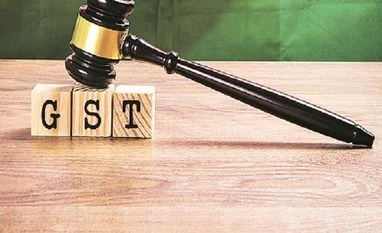
The highs, hurdles and the grey areas of one and a half years of GST

Despite the changes in its journey so far, GST hasn't yet embraced petroleum, parts of the real estate and electricity. The required consensus over the issue still eludes the Council

GST
Indivjal Dhasmana New Delhi
Last Updated : Jan 16 2019 | 3:06 PM IST
In its one-and-a-half-year-old journey, the goods and services tax (GST) has seen many ups and down. In fact, its start was contentious as well. After much debate, the government had to bow to opposition pressure and take out the contentious tax of up to one per cent on inter-state movement of goods, which was originally planned to benefit the manufacturing states. 

The very fact that GST Council has held 32 sittings shows the level of changes the new tax has undergone to address the woes of various stakeholders. Even if one were to take out 18 meetings, held before the introduction of GST on July one 2017, 14 meetings were held since its rollout, which means a meeting was held every 18 months or less on average.

And all the decisions were taken on consensus. Those not evoking consensus were given to various panels to arrive at some sort of understanding between various states and the Centre. It is now that states have complained that the Centre is pushing its agenda by including various items at the last minute. 

Pruning the 28% list

There were 228 items that attracted a peak rate of 28 per cent when the GST came into existence in India,  but today, that slab has only 39 items. This itself points to large-scale tweaks in the tax structure. Many consumer items saw rates cut from 28 per cent and this was one of the reasons why the anti-profiteering authority has had to penalise fast moving consumer goods major HUL for not allegedly passing on the benefits to the consumers.

But the move to prune the list has its own shortcomings as well. As M S Mani, partner, Deloitte, puts it, "The movement of product rates across categories since GST introduction has meant that businesses have to constantly keep tweaking their purchase orders, sales plans, procurement strategies and IT systems."

He says many businesses have had to engage large internal teams or rope in consultants to ensure that these changes are made on an ongoing basis.

After moving over 20 items to lower rates in December 2018, there was a huge demand for a cut in cement rates and under-construction houses at the January meeting, but revenues collections came in the way. 

Finance minister and Council chairman Arun Jaitley categorically stated that tariffs would be lowered on individual items only if revenues rise. 

Collections miss the mark

GST collections missed the target of Rs one trillion a month, except on two occasions, in the first nine months of FY19. 

The collections in January, February and March have to average Rs 1.23 trillion to meet the budgeted target. 

As such, while the rates were lowered, slabs remained same. There was, however, accept that the two standard GST rates -- 12 and 18 per cent -- could be merged in one once revenues rise. 

The shortfall could be attributed to rate cuts and tax evasion. 

However, figures of tax evasion are not high enough to warrant such a shortfall. Tax evasion detected in April-November stands at Rs 12,767 crore, of which Rs 7,910 crore has been recovered, according to the data presented by the finance ministry in Parliament. 

What may come handy in this respect is the e-way Bill. However, the initial attempt to roll out the e-way bill for inter-state movement of goods came a cropper. It was to be launched on February 1, 2018, but the portal could not take the load, crashing in between. 

After much hue and cry, the e-way bill was deferred and rolled out for inter-state movement of goods worth over Rs 50,000 from April 1, 2018. After that,  it was introduced for inter-state movement in phases. By June 15, the bill was rolled out in every state even for intra-state movement of goods in every state.
Impact on inflation

While rate cuts did hit the exchequer, they had a soothing effect on inflation. Nevertheless, it should be noted that taxes are just one determinant of prices. Taking that into consideration, the inflation rates in biscuits, leather boots, refrigerators and quilts, which saw rate cuts, also witnessed range-bound inflation. However, TV sets and air conditioners have seen a rise in inflation rates in recent months. 

The low inflation rates in internet expenses and mobile charges could be attributed more to technological advancements, than stable GST rates. 

Hike in cess on cigarettes by the GST Council in July 2017 suddenly increased the inflation rate to over seven per cent that month, from over five per cent in May 2017 and then to even 10-11 per cent in the rest of the months till June 2018. It started moderating only from July 2018 only after the full-year impact of cess came to an end. 

Returns remain an irritant

E-way bill and the rates were not the only contentious issues in GST. Businesses, particularly small and medium ones, were perturbed over returns filing process. After much protests, the GST Council deferred forms GSTR-1 which is a purchase return and GSTR 3 which is input-output form. 

However, GSTR 2, a supply return, and GSTR 3B, which is a summary input-output return, remained. Even those will be replaced by a simple return process from July 1 this year. The pilot will start on April 1, 2019. In the new process, businesses will have to continuously update their invoices. 

Abhishek Jain, partner EY India, says, "It's been an action-packed journey of GST for businesses in India -- ranging from wide-ranged rate rationalisation, numerous clarifications, return simplifications and many more."

In between, various writ petitions were filed in courts against some alleged loopholes in the GST system, such as removal of incentives given to multiplexes in some states, and restrictions in the use of advance authorisation schemes under the new tax regime. Besides, GST on indenting agents, which are service providers for overseas firms, and rights of landowners and real estate developers are also under dispute. 

Abhishek Rastogi, partner Khaitan & Co, who has filed many petitions against GST loopholes says, "There are certain very critical issues, such as transfer of development rights and intermediary services, which have a key impact on the Indian economy and should be resolved urgently."

Despite changes in its journey so far, GST could not embrace petroleum, parts of the real estate and electricity. The required consensus over the issue still eludes the GST Council.

One subscription. Two world-class reads.

Already subscribed? Log in

Subscribe to read the full story →
*Subscribe to Business Standard digital and get complimentary access to The New York Times

Smart Quarterly

₹900

3 Months

₹300/Month

SAVE 25%

Smart Essential

₹2,700

1 Year

₹225/Month

SAVE 46%
*Complimentary New York Times access for the 2nd year will be given after 12 months

Super Saver

₹3,900

2 Years

₹162/Month

Subscribe

Renews automatically, cancel anytime

Here’s what’s included in our digital subscription plans

Exclusive premium stories online

  • Over 30 premium stories daily, handpicked by our editors

Complimentary Access to The New York Times

  • News, Games, Cooking, Audio, Wirecutter & The Athletic

Business Standard Epaper

  • Digital replica of our daily newspaper — with options to read, save, and share

Curated Newsletters

  • Insights on markets, finance, politics, tech, and more delivered to your inbox

Market Analysis & Investment Insights

  • In-depth market analysis & insights with access to The Smart Investor

Archives

  • Repository of articles and publications dating back to 1997

Ad-free Reading

  • Uninterrupted reading experience with no advertisements

Seamless Access Across All Devices

  • Access Business Standard across devices — mobile, tablet, or PC, via web or app

Next Story