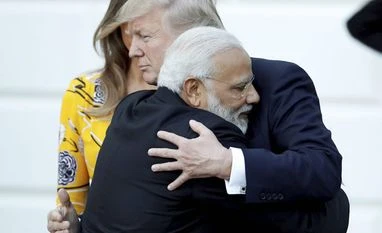
Officials are scrambling to create a trade pact, to be signed with US President Donald Trump, before his visit.
On Tuesday, Trump said he would sign a trade agreement with India during his visit only if it was the “right deal”. However, with the US demanding broad trade concessions across multiple sectors such as agriculture, information technology, and automobiles, talks have reached a stalemate, multiple officials said on Wednesday.
A visit by Trump’s right hand man for trade negotiations — United States Trade Representative Robert Lighthizer — also remains uncertain. Lighthizer was set to attend a crucial meeting in New Delhi this week to iron out trade issues, but no official confirmation was put out, as of Wednesday. People in the know say the government is now betting on a compromise on agri trade, which may see India systematically revoking high import duties on key agricultural produce such as almonds, walnut, apples, and wine, on which New Delhi had raised duties by up to 50 per cent last year. Farm lobbies have pressurised the government to restrict market access for these products. “Discussions on other American demands — lower duties for industrial components, engineering products, and tech goods like smartwatches and iPhones — are lengthy and not expected to be completed by the time of Trump’s visit,” an official said.
While both sides are working on a “comprehensive trade package”, US trade officials have expressed their displeasure with New Delhi’s decision to saddle medical device imports with an additional health cess.
India has refused to roll it back, but people in the know say the government may allow a trade margin policy for specific high-value items like coronary stents. Further, the US on Tuesday classified India as a developed economy, making it ineligible for trade benefits to developing nations. As a result, chances of India reclaiming trade benefits under the US’ Generalized System of Preferences (GSP) that it has hitherto received has been quashed.
Read this article for free
Register to continue reading premium journalism and analysis from Business Standard.

 "Trump's India visit: Officials rushing to create a trade agreement")











