Home / Economy / News / Uncertain times ahead, EMs lack safety net: RBI governor Shaktikanta Das
Uncertain times ahead, EMs lack safety net: RBI governor Shaktikanta Das
The general government debt of AEs as a group has surpassed 100 per cent of gross domestic product (GDP), whereas the fiscal space is also constrained in many of these countries
The global economy is moving into a “new and unsettling phase” where “solutions are turning more difficult to come by” in an environment of stressed trade negotiations, rising geopolitical confrontation, and limited policy space and high debt levels in several economies, Reserve Bank of India (RBI) Governor Shaktikanta Das said on Friday.
This has a negative connotation for emerging markets (EMs), as these are building up excessive leverage because of the low interest rates in the advanced economies (AEs). This is especially true in the absence of a strong global safety net such as currency swap arrangements between the AEs and the EMs.
The general government debt of AEs as a group has surpassed 100 per cent of gross domestic product (GDP), whereas the fiscal space is also constrained in many of these countries, the governor said at the launch of a book (India’s Relations with the International Monetary Fund) in New Delhi.
“The global order today faces several challenges that will test the skills of the international organisations as well as those of national monetary and fiscal authorities,” the governor stated, adding, “International coordination has become somewhat weaker in the very recent years. Many AEs have been pursuing low interest rate policies for long without perhaps adequate recognition of their adverse impacts.”
The RBI governor rued the fact that at the global level, $13 trillion of debt, or nearly a third of the bonds issued by advanced economies, was trading at negative yields. Equity premium has crossed 4 per cent, which is 1 standard deviation higher than its long-term average.
“Return to lower interest rates in AEs poses challenges as leverage has already built up in the EMs and the needed deleveraging is not complete in many European economies,” the governor said.
Amid low global interest rates, total credit to the non-financial sector in the EMs went up from 107.2 per cent of GDP at the end of 2008 to 194. 4 per cent of GDP by March 2018, before it dropped to 183.2 per cent at the end of 2018. Net private capital flows to EMs in the form of direct and portfolio investments also nearly doubled in the post-crisis period, according to the RBI governor.
“This has posed risks to some EMs. Some of these risks have surfaced in the form of weak bank/non-bank balance sheets and some remain latent and can surface, especially when the global interest rate cycles turn decisively,” Das said in his speech.
“The world will be looking to the IMF to suggest dependable solutions. The EMs on their part need to follow policies that promote macroeconomic and financial stability, while focusing on growth,” he said.
EMs no longer face only balance of payments crisis, but the nature of the shock has changed to a full-blown crisis. After the financial crisis of 2008-09, and quantitative easing thereof, the EMs and their markets have received huge funds because of a global spillover, but this has “amplified both sudden surges and sudden stops or reversals of capital flows”, he said.
Here, the governor stressed the need for a robust global safety net. “The existing state of financial safety nets, regional or multilateral, falls grossly short of providing the necessary buffers against such turbulence. Moreover, access to swaps from systemically important central banks is not available to the EMs. For many EMs, high fluctuations in currency movements have pronounced macroeconomic consequences,” the RBI governor said.

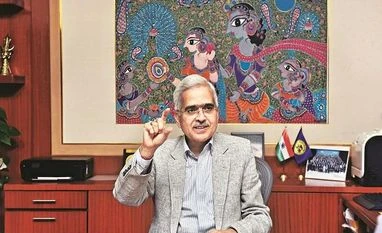 "Uncertain times ahead, EMs lack safety net: RBI governor Shaktikanta Das")


