With monsoon in sight, kharif sowing begins
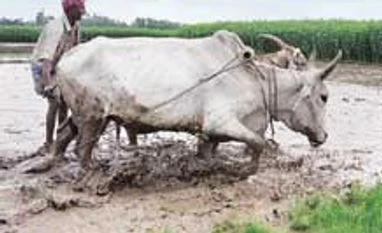
Sanjeeb Mukherjee With the southwest monsoon on the horizon, farmers have started sowing of kharif crops. A more-than-normal winter rain has also helped in providing some moisture to the soil.
According to a preliminary estimate of the department of agriculture, kharif crops till May 22 had been sown on 5.622 million hectares, which is almost 14.6 per cent more than the area sown during the year-ago period. Sugarcane, which is planted twice in a year, has been sown on 4.07 million hectares, while during the year-ago period it was 4.05 million hectares.
Actual assessment of sowing and the progress could be made only after monsoon enters the Indian mainland.
India Meteorological Department had said the southwest monsoon was expected to arrive over the Kerala coast on May 30, two days ahead of its normal arrival date, while a private weather forecasting company said it could be earlier.
Once the rains come, actual sowing will start and it will gather pace in July, which is when the highest amount of rain falls in the four-month southwest monsoon season. Paddy, oilseeds, pulses, cotton, jute and sugarcane are some of the main crops grown during kharif season,paddy being the biggest foodgrain. Data showed that between March 2015 to May 20, 2015, India received almost 163.6 millimeters of rainfall, which is almost 53 per cent more than normal.
Good showers in the off-season have also filled up the water reservoirs in the country, apart from preventing the heat-wave setting in early.
According to the Central Water Commission (CWC) till April 30, water levels in over 80 odd reservoirs was around 48.62 billion cubic meters, which is 91 per cent of the corresponding levels last year and 120 per cent of the average levels in last 10 years.
The IMD, in its first forecast, had said rains in 2015 would be below normal at 93 per cent of Long Period Average (LPA), while private agency Skymet had said rains would be normal at 102 per cent of LPA.
LPA is the average rainfall that falls in India from 1951 to 2000 and is estimated at 89 centimeters.

 "With monsoon in sight, kharif sowing begins")


 Connect with us on WhatsApp