Lok Sabha elections: largest democracy lags the world in voter turnout

India had a record voter turnout of 66.4% in 2014. This is still lower than the global median of 68.03%
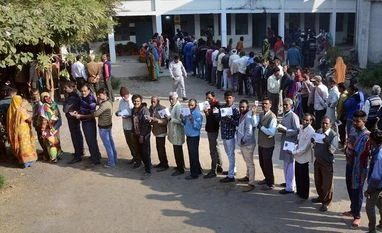
People wait with their identity cards to cast their votes for the Madhya Pradesh assembly elections. Photo: PTI
Sachin Mampatta
2 min read Last Updated : Mar 19 2019 | 10:01 PM IST
India's 900 million voters will take part in the world’s biggest democratic exercise when the country goes to elections next month. However, an analysis of the data from across the world suggests that India is behind several countries when it comes to the number of people turning out to vote. 

The analysis is based on data from 184 elections across the world which pegs the median voter turnout at 68.03 per cent. The median denotes the middle value in a data-set. This means that there are an equal number of elections which had higher voter turnout than this median figure, and an equal number with lower turnout. The data is from the Stockholm-based International Institute for Democracy and Electoral Assistance (International IDEA). Business Standard’s analysis looked at voter turnout in the most recent polls. Elections in 2014 or later were considered to make the numbers more comparable with India. 

 
India had a record voter turnout of 66.4 per cent in 2014. This is still lower than the global median of 68.03 per cent. India also lags many of its neighb-ours, including Bhutan and Sri Lanka. 

One way to increase the participation rate could be greater gender parity. The voting rate among women has been lower than men in every poll since the Independence. Also, more female participation would result in a higher overall turnout figure.

The implications of higher female participation may also be felt politically, suggested a June 2013 paper by Mudit Kapoor and Shamika Ravi in an Indian School of Business study. 

Women may be more likely to vote for change. “Our results strongly suggest that an increase in the female voters turnout negatively… (affected) the probability of re-election for a political party in a given constituency. And in contrast, the results also show that male voters increased the probability of re-election of political parties,” said the authors.  

One subscription. Two world-class reads.

Already subscribed? Log in

Subscribe to read the full story →
*Subscribe to Business Standard digital and get complimentary access to The New York Times

Smart Quarterly

₹900

3 Months

₹300/Month

SAVE 25%

Smart Essential

₹2,700

1 Year

₹225/Month

SAVE 46%
*Complimentary New York Times access for the 2nd year will be given after 12 months

Super Saver

₹3,900

2 Years

₹162/Month

Subscribe

Renews automatically, cancel anytime

Here’s what’s included in our digital subscription plans

Exclusive premium stories online

  • Over 30 premium stories daily, handpicked by our editors

Complimentary Access to The New York Times

  • News, Games, Cooking, Audio, Wirecutter & The Athletic

Business Standard Epaper

  • Digital replica of our daily newspaper — with options to read, save, and share

Curated Newsletters

  • Insights on markets, finance, politics, tech, and more delivered to your inbox

Market Analysis & Investment Insights

  • In-depth market analysis & insights with access to The Smart Investor

Archives

  • Repository of articles and publications dating back to 1997

Ad-free Reading

  • Uninterrupted reading experience with no advertisements

Seamless Access Across All Devices

  • Access Business Standard across devices — mobile, tablet, or PC, via web or app

Next Story



