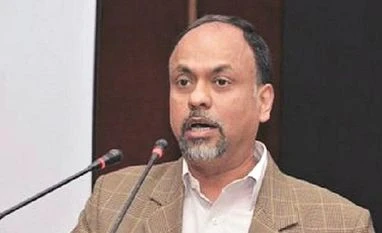
The insurance sector rode the most turbulent wave of Covid-19 without anyone manning the chairman’s post at the apex body — Insurance Regulatory Development Authority of India (Irdai) — and came out relatively unscathed. But the industry badly needed some reforms to propel it towards higher growth and increased insurance penetration.
That is what has happened in the past one year since Debasish Panda took over the Irdai chairman in March, after nearly 10 months of the position lying vacant.
The host of changes brought about in the past year have been aimed at improving the ease of doing business and attracting fresh capital into the sector so that the penetration can be increased significantly.
Almost 22 years after India’s insurance sector was opened up, unshackling the control of state-owned companies, more than 50 private players have set up shop. But India’s insurance penetration needle has moved little.
The overall insurance penetration has increased from 2.71 per cent in 2001-02 to just 4.20 per cent as of 2021-22. Life insurance penetration has increased from 2.15 per cent to 3.20 per cent during this period, while non-life insurance penetration has moved up by just 44 basis points to just 1 per cent. The world average for insurance penetration is 7 per cent.
The regulator, under Panda, has set a target, wherein by 2047 every citizen will have appropriate life, health, and property insurance cover and every enterprise will be supported by insurance solutions.
The regulator, for the first time, has assigned aspirational targets for insurers for a period of five years to double the penetration in the country. For them to move towards this target, the regulator has taken a series of steps to reduce the regulatory as well as compliance burden.
For example, the regulator extended the “use & file” procedure to all health insurance products and almost all general insurance products under fire, motor, marine, and engineering. This was done to empower the insurance companies to respond to the emerging market needs in terms of products. The procedure was then extended to life insurance products in select segments.
Irdai has reduced capital burden in a number of segments so that the insurers can route that freed up capital to alternate areas, which perhaps need more investments.
Restrictions related to distribution channels have also been eased, whereby corporate agents can tie up with as many as nine insurers each in life, health, and general segments. This is expected to enable smaller insurers, who might not have a tie-up with a major bank earlier, to better distribute their products and intensify competition and, thereby, provide a wide variety of choices to the consumer.
Panda has pitched to investors of all kinds to invest in the sector because the industry would need a capital infusion of around ~50,000 crore every year to double its penetration in the next five–seven years.
To attract capital, the regulator has made it easier for private equity funds to invest in the sector as investment through Special Purpose Vehicle (SPV) has been made optional for them. Secondly, subsidiary firms have been allowed to be promoters of insurers. Moreover, the regulator has said investment up to 25 per cent of the paid-up capital by a single investor will be treated as ‘investor’ and above that as ‘promoter’. Earlier, the threshold was 10 per cent for individual investors and 25 per cent for all investors collectively.
Industry insiders suggest the sector is in a policy sweet spot because perhaps for the first time in its history, the regulator has taken up the developmental role seriously.
Irdai has also now provided more flexibility and autonomy to the boards of insurers in operational and financial decisions.
“He has come as a breath of fresh air for the industry. While his vision for the sector is exciting, the execution of the reforms will be the key. For the first time, we are seeing “principle-based regulation” as the industry has matured. He has reposed faith in the companies to do a better job, both for the policyholders as well as other stakeholders. This, to my mind, is a big shift in the mindset of the regulator,” Bhargav Dasgupta, MD & CEO at ICICI Lombard General Insurance, told Business Standard.
Industry insiders, on the condition of anonymity, suggested the only criticism against Panda was perhaps the changes were happening at one go and too fast. Having said that, it creates adaptability challenges, they opined.
Among other major initiatives that Panda has undertaken is building an online marketplace, Bima Sugam, that will allow insurers to sell their products on the platform, settle claims, and service customers. It is expected to be a one-stop destination for all the insurance needs of a consumer as well. All these facilities will be provided to policyholders with e-insurance accounts.
“Panda has been engaging with all the stakeholders regularly to understand their problems and resolve them wherever necessary,” said Nilesh Sathe, former member at Irdai.
“The amendments that have been proposed and are awaiting parliamentary approval will bring in more players to the sector, which the current chairman has been emphasising on,” Sathe said. The recent Budget announcements will have an impact on the sector so that has to be navigated carefully, he added.
There are still a few areas that await clarity from the regulator. Despite allowing insurers to go ahead with surety insurance business in early 2022, only two have launched it because the companies have no clarity on their demand for changes in the Indian Contract Act and Insolvency and Bankruptcy Code.
Further, there is no improvement on reducing goods and service tax on health insurance premiums. Unlike the banking sector, very few insurers have listed themselves on the bourses, despite being in the business for almost two decades.
Ashvin Parekh, MD of Ashvin Parekh Advisory Services, said: “Panda has come with the support of policymakers as they have realised that the sector needs more investment. He has actually freed the industry from a lot of shackles.”
“With the regulations easing to allow more experimentation and more players, Irdai has to now maintain a fine balance between regulating the sector and developing it. So, the supervisory aspect of Irdai has to be strengthened with the reforms they are bringing in,” he said.