Thrust on non-par products to yield desired results: LIC chief M R Kumar

We intend to sharpen the focus on bancassurance to steadily and considerably increase its volume, thereby its share in our business, said Kumar
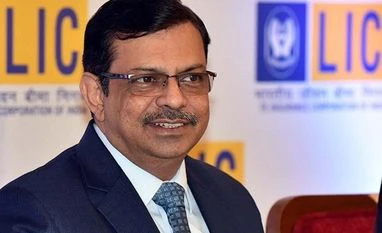
M R Kumar, Chairman, LIC
M R Kumar, Chairman, LIC. Photo: Kamlesh Pednekar
Subrata Panda Mumbai
4 min read Last Updated : Sep 27 2022 | 11:39 PM IST
State-owned Life Insurance Corporation (LIC) is confident that its strategy to rejig the product portfolio by introducing more non-participating products and a sharper focus on the bancassurance channel will give it the desired results in terms of growth and market share.

“We intend to sharpen the focus on bancassurance to steadily and considerably increase its volume, thereby its share in our business,” LIC Chairperson M R Kumar said at the insurance major’s first-ever annual general meeting on Tuesday.

“Our tie-up with banks continues to be robust. We intend to work with all partner banks, and at the same time strengthen the IT processes between the banks and us. In LIC 3.0, we shall re-align our activities in a manner that generates exponential growth and close the second quarter ending September with enhanced market share,” he said.

To drive profitability and higher margins, LIC has diversified its product portfolio by introducing more non-par products. Traditionally, LIC focused more on participating products, such as endowment and money-back plans. On an annual premium equivalent (APE) basis, non-par was about 7 per cent of LIC’s portfolio but it plans to take it up to 12-15 per cent in three-four years.

In non-participating policies, the profits are not shared and no dividends are paid to the policyholders.

LIC had a single “life fund” until the LIC Act was amended to bring its surplus distribution mechanism on a par with private life insurers. After the amendment, the life fund has been segregated into two funds — participating policyholders fund and non-participating policyholders’ fund. Consequently, the surplus distribution in the participating policyholders’ fund has been modified to 90:10 in a phased manner, wherein 90 per cent will go to policyholders and 10 per cent to shareholders. And, 100 per cent of the surplus goes to the shareholders.

LIC reported a net profit of Rs 682.88 crore in the April-June quarter (Q1), driven by its non-par business. LIC’s mainstay has been its agency force of 1.34 million. However, it is now trying to focus more on its bancassurance partners to drive its non-par business. On the bancassurance side, the corporation has around 62,000 outlets. It has 14 major banks, including IDBI Bank, 13 regional rural banks, and 45 cooperative banks as partners. Also, there are 71 corporate agents, 35 insurance marketing agents, and 63 brokers.

“The opportunities of digital engagement and digitised delivery of services with migration of the customer from physical to digital or phygital mode are widely seen. A strategy of deploying bionic agents by extending tech support in the form of digital tools and analytics to the agency force will surely go a long way in building the core digital sales capabilities, exploring a win model, where there's a convergence of digital along with the best human qualities of advice and engagement,” Kumar said.

He stressed the fact that despite two decades of opening up of the insurance sector, LIC still remains the market leader and holds a major market share of 63.25 per cent in first-year premium income and 74.62 per cent in number of policies as of March 31, 2022. As of Q1FY23, LIC’s market share in terms of first-year premium income was 65.42 per cent. 

Since its listing on the bourses in May, LIC’s stock has lost over 28 per cent value. Shares of the insurer closed 0.28 per cent lower at Rs 629.05 on the BSE on Tuesday.  

In a regulatory filing on Tuesday, LIC said it acquired over a 2 per cent stake in state-owned refiner Bharat Petroleum Corporation (BPCL) for nearly Rs 1,598 crore since December last year.

The life insurance major said its shareholding in BPCL increased from 15,25,08,269 to 19,61,15,164 equity shares, increasing its shareholding from 7.03 per cent to 9.04 per cent of the paid-up capital of the company.

According to Sebi’s regulatory norm, listed companies have to disclose shareholding in excess of 2 per cent.

One subscription. Two world-class reads.

Already subscribed? Log in

Subscribe to read the full story →
*Subscribe to Business Standard digital and get complimentary access to The New York Times

Smart Quarterly

₹900

3 Months

₹300/Month

SAVE 25%

Smart Essential

₹2,700

1 Year

₹225/Month

SAVE 46%
*Complimentary New York Times access for the 2nd year will be given after 12 months

Super Saver

₹3,900

2 Years

₹162/Month

Subscribe

Renews automatically, cancel anytime

Here’s what’s included in our digital subscription plans

Exclusive premium stories online

  • Over 30 premium stories daily, handpicked by our editors

Complimentary Access to The New York Times

  • News, Games, Cooking, Audio, Wirecutter & The Athletic

Business Standard Epaper

  • Digital replica of our daily newspaper — with options to read, save, and share

Curated Newsletters

  • Insights on markets, finance, politics, tech, and more delivered to your inbox

Market Analysis & Investment Insights

  • In-depth market analysis & insights with access to The Smart Investor

Archives

  • Repository of articles and publications dating back to 1997

Ad-free Reading

  • Uninterrupted reading experience with no advertisements

Seamless Access Across All Devices

  • Access Business Standard across devices — mobile, tablet, or PC, via web or app

Topics :Life Insurance Corporation of India LICInsurance SectorLIC LIC policyInsurance firmsLife Insurance CorporationStockPolicyholderBPCLMarketproduct portfolio

Next Story



