
Banks' GNPAs fall 5% in Sept, but current situation can impact health: RBI
Indian banks' gross non-performing assets declined to 5.8 per cent, but the present macroeconomic environment can impact lenders' health, the Reserve Bank said on Tuesday
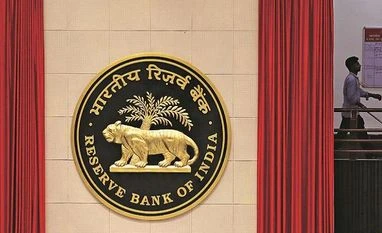 "Banks' GNPAs fall 5% in Sept, but current situation can impact health: RBI")
WebinarsNew
Deep DiveNew
Explore Business Standard
Indian banks' gross non-performing assets declined to 5.8 per cent, but the present macroeconomic environment can impact lenders' health, the Reserve Bank said on Tuesday
Indian banks' gross non-performing assets declined to 5.8 per cent, but the present macroeconomic environment can impact lenders' health, the Reserve Bank said on Tuesday.
The GNPAs, which touched a peak in FY18 following the asset quality review, have been declining sequentially to reach 5 per cent in September, the RBI said in the 'Trends and Progress of Banking in India' report for FY22 released on Tuesday.
The number stood at 5.8 per cent in March 2022, according to the report which also had a strong commitment by the RBI to be not complacent, given the present environment.
"Although presently the Indian banking sector remains robust and resilient with improved asset quality and strong capital buffers, the policymakers remain mindful of dynamically evolving macroeconomic conditions that may impinge on the health of regulated entities," the report said.
The decrease in the GNPAs was attributed to lower slippages and also a reduction in outstanding GNPAs through recoveries, upgradations and write-offs, the report said.
However, the restructured assets ratio increased by 1.1 percentage points for all the borrowers and by 0.5 percentage points for large borrowers, the report said, adding that the efforts to help individuals and small businesses with the loan recast scheme has been successful.
In what can be called as a divergent trend between the state-run lenders and the private lenders, the report said, the reduction in the stock of GNPAs was due to write-offs in the public sector banks in FY22, while in the case of private banks, upgradation of loans was the primary driver for asset quality improvements.
Interestingly, all the bank groups showed a decline in the GNPAs, except the foreign banks, where the loss assets increased in FY22 to 0.5 per cent from 0.2 per cent in FY21.
The reliance on large borrowers for loans seems to be going down with the increase in the retail business, and accounts of over Rs 5 crore accounted for 47.8 per cent of the outstanding credit in FY22 as against 48.4 per cent in FY21.
However, such accounts' contribution to overall dud assets improved more substantially to 63.4 per cent of the overall NPAs in FY22 as against 66.4 per cent in FY21.
An acceleration in income and contraction in expenditure boosted the profitability of SCBs in 2021-22, measured in terms of return on equity and return on assets, the RBI said.
The consolidated balance sheet of scheduled commercial banks (SCBs) registered double-digit growth in 2021-22, after a gap of seven years, led by credit growth, which accelerated to a ten-year high in the first half of FY23, it said.
Amid concerns over the high haircuts in bankruptcy resolutions, the RBI reiterated its pitch for the resolution value to be compared with the liquidation value of stressed assets.
At end-September 2022, in cases where the corporate insolvency resolution processes (CIRPs) were initiated by financial creditors (FCs), the realisation through the IBC was close to 201 per cent of the liquidation value, it added.
(Only the headline and picture of this report may have been reworked by the Business Standard staff; the rest of the content is auto-generated from a syndicated feed.)
First Published: Dec 27 2022 | 8:12 PM IST


 Connect with us on WhatsApp