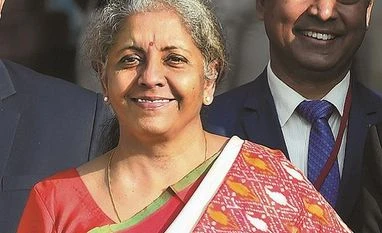
The Centre has lifted the restrictions on the grant of government businesses to private banks, Finance Minister Nirmala Sitharaman announced on Wednesday. All private sector banks now will be allowed to conduct government-related banking transactions, such as tax and pension payments.
Sitharaman in a tweet said that private banks can now be equal partners in the development of the Indian economy, furthering government social sector initiatives, and enhancing customer convenience.
“Embargo lifted on grant of government business to private banks. All banks can now participate,” she tweeted.
By lifting the embargo, this move will spur competition and promote greater efficiency in the standards of customer services, the Department of Financial Services said in a statement.
In a statement, the finance ministry said the government has conveyed its decision to the Reserve Bank of India (RBI). “With the lifting of the embargo, there is now no bar on the RBI for authorisation of private banks for government business, including government agency business,” the statement added.
Government-related banking transactions include taxes and other revenue payments, pension payments, and small savings schemes.
In 2012, the finance ministry had not allowed private banks, barring some, to undertake government business for three years.
In 2015, the government had continued with the embargo, and allowed the private sector with existing government agency business to continue without any fresh authorisation to private banks.
For undertaking government agency business, the RBI pays a commission to banks. The central bank carries out the general banking business of the central and state governments through agency banks appointed under Section 45 of the RBI Act, 1934. The government transactions eligible to commission are revenue receipts, payments on behalf of the central and state governments, pension payments, and any other item specified by the RBI. The current directive relates to the central government’s business.
“Private banks will get a level playing field, and get more room for government business,” said Prashant Kumar, managing director and chief executive officer, YES Bank.
This will also benefit customers in specific instances like businesses and firms maintaining accounts with public sector banks (PSBs) for paying tax, added Kumar. Now, this can be done through private banks as well, he added.
The social sector programmes of the government can be conducted through private banks as well, said Kumar. When private banks get government business, they will be obliged to perform, he added. “Private banks are competent to handle mandates for public benefit with a robust digital backbone.”
Hopefully, state governments will take a cue from this shift in approach and become open to engage closely with private banks, he added.
The development underscores the importance of private banks and their technological prowess, said Prakash Agrawal, head-financial institutions at India Ratings and Research. This will improve the flow of current account savings account, along with pension accounts, improving both their funding and fee income, said Agrawal.
However, PSBs will get impacted by the move, as this is a very large business for them, said a former public sector banker. There is a strong chance that a good chunk of this business will move to private banks over a period of time.
But private banks will not look at transaction-related business, given not much money is involved in that, said the banker. Business that pertains to the deployment of funds through various government ministries will be more lucrative, he added.
R K Thakkar, former chairman of UCO Bank, said the size and scale of the business is growing every year and there is space for all. “This will be good for competition and enhance customer convenience,” he said.
To give an estimate on the size of the government funds routed through agency banks, Thakkar said taxes worth Rs 2-2.5 trillion are routed through agency banks every month.
Calling it a “good” decision, former banking secretary D K Mittal said the RBI will now have to work out the modalities for allowing more banks to undertake government business. This will negatively impact banks that are currently allowed to do business due to intense competition, he added.

 "Centre lifts embargo on grant of govt businesses to private banks")


